
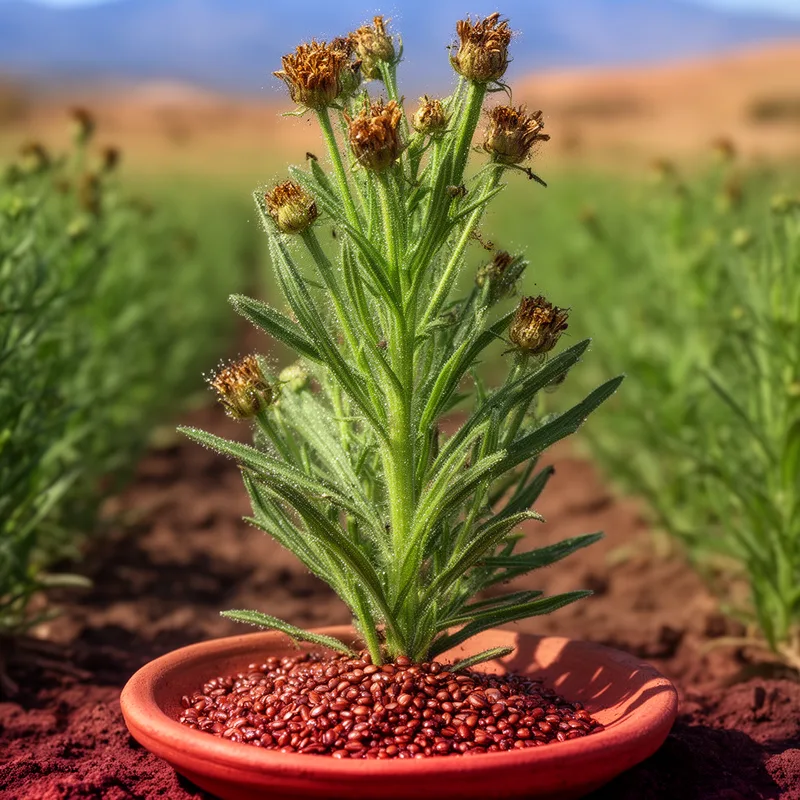
Madia sativa
- noun
- Specialized
- The sticky leaves of Madia sativa help protect the plant from herbivores.
Examples
-
Madia sativa is grown in some regions for the extraction of its oil-rich seeds.
-
Farmers in Brazil cultivate Madia sativa for its oil.
-
Researchers have studied Madia sativa for its potential in sustainable agriculture.
-
The oil extracted from Madia sativa is used in cooking.
-
Madia sativa is cultivated primarily for its oil, which is extracted from its seeds.
-
The oil derived from Madia sativa is valued for its culinary uses.
-
Farmers grow Madia sativa in South America to produce oil for cooking and other applications.
Synonyms

A South American herb with sticky leaves grown for its oil

A South American herb with sticky leaves grown for oil
A South American plant with sticky leaves used to make oil and medicine
Surface Forms
Morphology
This is a standard botanical binomial combining the genus name 'Madia' with the species epithet 'sativa' (literally 'cultivated'), so a learner who knows both constituents can infer it refers to a cultivated Madia plant used for oil. Binomial nomenclature is compositional and cross-linguistic, making the meaning directly derivable from the parts even if the terms are specialized.
Etymology
Madia sativa is a Latin plant name: Madia is the genus and sativa is a Latin word meaning 'cultivated' or 'sown'. The name Madia may come from an old local or Spanish name for the herb in South America, so the full name points to a plant people grow for its oil-rich seeds.

