
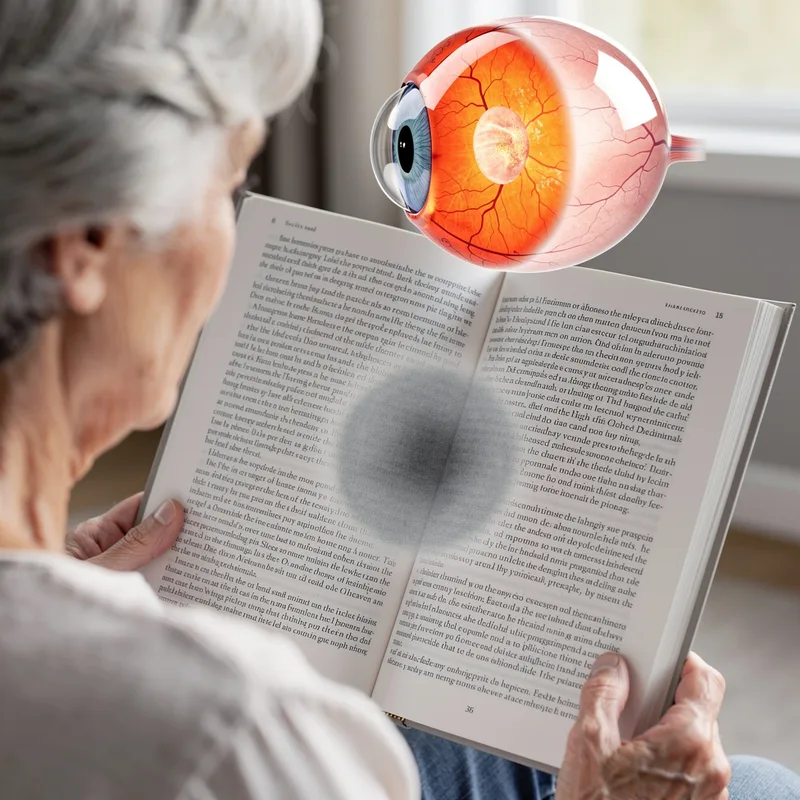
macular degeneration
 3
6.3
3
6.3

- noun
- /ˈmækjələr ˌdɛdʒəˈnɛrɛɪʃən/
- Specialized
- Carotenoids have been linked with the prevention of eye disorders, such as age-related macular degeneration and cataracts.
- age-related macular degeneration
- macular degeneration (AMD)
Loading YouTube…
Watch on YouTubeI wonder if the LASIK will fix macular degeneration.
- I wonder if the LASIK will fix macular degeneration.
- OK, macular degeneration is almost certainly a disease that is worsened by the wrong diet.
- There was this clinic in Florida a few years ago was touting stem cell therapies for macular degeneration.
- And there's two forms of macular degeneration, but they both end up targeting the same part, the same part of the retina.
Examples
-
Currently, there is no cure for macular degeneration or retinitis pigmentosa.
Academic text (2003) -
Two other teams are working on different approaches to helping patients suffering from age-related macular degeneration and retinitis pigmentosa.
Academic text (2003) -
Patients who have age-related macular degeneration lose their central vision.
Academic text (2003) -
We talked about your vision and the diagnosis of age-related macular degeneration during your last visit.
Academic text (2007) -
Mr. Y, aged 74, has severe vision loss because of macular degeneration, and his story is similar to that of Mr. X.
Academic text (2008) -
In our small study, we investigated whether this program increases the reading capacities of individuals with macular degeneration.
Academic text (2010) -
Consider the scenario of a woman with age-related macular degeneration who enters a physician's office to make an appointment.
Academic text (2009) -
Because most older adults have age-related macular degeneration, they usually require eccentric viewing training.
Academic text (2000) -
Age-related macular degeneration (ARMD) is a leading cause of blindness in this country.
Academic text (2008) -
A control group of patients with macular degeneration was given no zinc.
How Severe
- Specialized

 1
5.1
1
5.1

- Specialized
3
6.3
Surface Forms
Morphology
The meaning is directly compositional: 'degeneration' (deterioration) of the 'macular' (the macula, central part of the retina) yields an eye condition causing blurred vision or blindness, so a learner who knows both constituents can infer the medical sense. This is a non-idiomatic, descriptive medical compound following standard noun-noun composition, making it transparent rather than metaphorical or unpredictable.
Etymology
The name macular degeneration comes from the words macula, which means 'small spot' at the center of the eye, and degeneration, which means 'getting worse' or 'breaking down'. So the name describes that small central spot becoming damaged, which is why the condition causes 'blurry' or lost 'central vision'.