
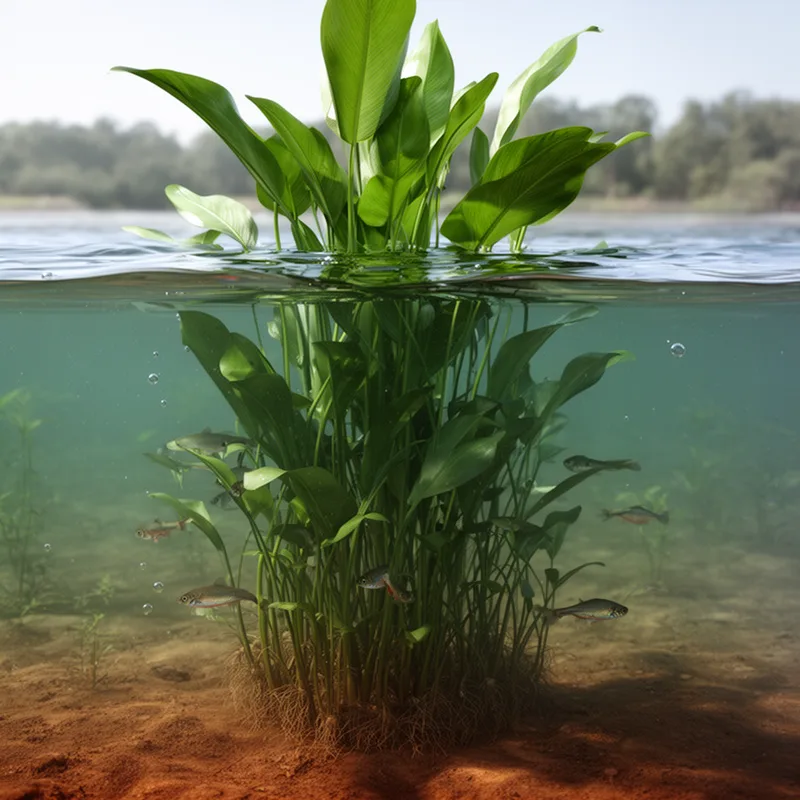
macrophyte
- noun
- /ˈmækrəˌfaɪt/
- Specialized
- In the summer, the lake was filled with colorful macrophytes that provided shelter for fish.
- macrophytes and algae
- aquatic macrophytes
- macrophyte cover
Examples
-
The lagoons are large, open expanses of water of complex origin that contain dense growths of macrophytes (McCarthy et al. 1993).
Academic text (2009) -
Vascular plants (macrophytes) begin to colonize lakes during the first half-century of lake development.
Academic text (2007) -
By the second year, substantial macrophyte cover had developed only in the planted wetland, as expected.
Academic text (1998) -
Turbidity is influenced by macrophyte cover, bioturbation, and phytoplankton growth.
Academic text (1998) -
The number of macrophyte taxa increased dramatically in both wetlands (Figure 4).
Academic text (1998) -
The apparent increase in algal diversity in the unplanted wetland in the third year correlates with the increase in macrophyte cover.
Academic text (1998) -
One characteristic needed in macrophytes planted in a plant/rock filter is an extensive root system capable of growing in gravel.
Academic text (1998) -
The Yahara Lakes Association, a private group of lakeshore property owners, advocates for shoreline regulations and the control of nuisance macrophytes.
Academic text (2007) -
For example, in a eutrophic lake sediment, microbes may break down phytoplankton and macrophytes, releasing phosphorus.
Academic text (2000) -
Moreover, algae and macrophytes on the lake's surface render navigation difficult for nonmotorized boats, such as those used by cormorant fishermen.
Academic text (2002)
Synonyms

A plant that lives in water or very wet ground

A large plantlike living thing like seaweed that grows in water
How Big


Surface Forms
Morphology
macrophyte = phyte (semi-transparent) = macro + phyte
The word is built from the scientific prefix macro- plus the botanical element phyte, so the meaning is partly compositional but not fully accessible to average learners.
Etymology
Macrophyte comes from Greek parts macro- meaning 'large' and -phyte meaning 'plant'. So a macrophyte is a 'large plant', like the big water plants you can see in lakes, rivers, and wetlands.