
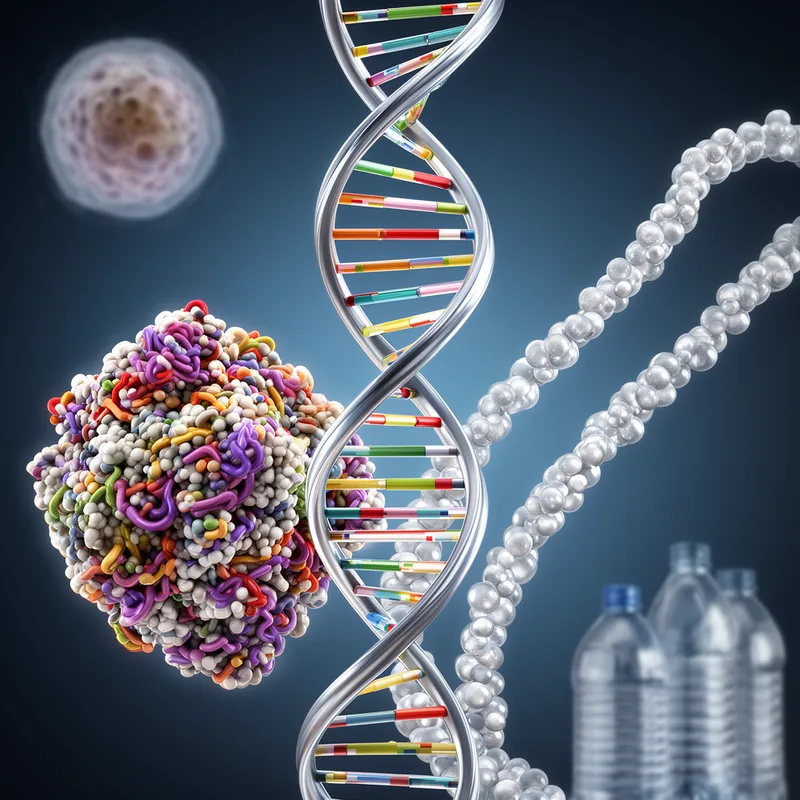
macromolecular


 1
7.3
- adjective
- /ˌmækroʊməˈlɛkjələr/
- Specialized
- Modern molecular biophysics is built on the twin pillars of genetic engineering and macromolecular structure determination.
- Macromolecular crystallography
- macromolecular structures
Loading YouTube…
Watch on YouTubeHow is ATP hydrolysis by CLIP X allowing this macromolecular machine to work?
- How is ATP hydrolysis by CLIP X allowing this macromolecular machine to work?
Examples
-
Typical macromolecular structures are at 2-3 Å resolution.
Academic text (1995) -
This problem is one of the remaining challenges in macromolecular crystallography.
Academic text (1995) -
OK, So what about the cell and macromolecular crowding?
-
As Figure 1 illustrates, this capability is already being used to follow processes of macromolecular assembly.
Academic text (1995) -
Indeed, the output from macromolecular crystallographers has accelerated during the 1990s.
Academic text (1995) -
Some kind of dense, long-chain macromolecular polymer.
-
However, not all materials can be crystallized; membrane proteins and larger multiprotein macromolecular assemblies are particularly difficult.
Academic text (2006) -
The explosive growth in structural biology itself has been the result of many important innovations in MIR, SIR, and MAD phasing of large macromolecular entities.
Academic text (2006) -
Currently, biology is becoming attractive to physicists as a consequence of the wealth of new information on macromolecular structure and the flowering of techniques that make possible the manipulation of macromolecules.
Academic text (1995) -
The study of macromolecular biology focuses on large molecules that play crucial roles in cellular functions.
How Large

Surface Forms
Morphology
Etymology
Macromolecular combines macro- meaning 'large' and molecular from molecule, a word for the tiny parts that make up matter. So macromolecular describes things made of very large molecules, like proteins or DNA.