
macroglobulinemia


 1
9.9
- noun
- /ˌmækroʊˌɡlɒbjʊlɪˈniːmiə/
- Specialized
- A certain ratio of IgM molecules is a signature of a type of cancer called Waldenström macroglobulinemia.
- Waldenström's macroglobulinemia
Examples
-
Most cases of Waldenström's macroglobulinemia are diagnosed secondary to a finding of fatigue-related anemia.
Academic text (2006) -
Waldenström's macroglobulinemia can cause symptoms like extreme fatigue and weight loss.
-
For example, a certain ratio of IgM molecules is a signature of a type of cancer called Waldenström macroglobulinemia.
Blog text (8) -
This agent has been useful in treating Waldenström's macroglobulinemia because most affected lymphoplasmacytic cells express this protein.
Academic text (2006) -
Although the nature of the relationship of the necrosis to anti-CD20 antibody therapy for Waldenström's macroglobulinemia remains unclear, the medical community should be aware of this possible association.
Academic text (2006) -
Biopsy also revealed some leukocytoclasia that was consistent with thrombosis secondary to Waldenström's macroglobulinemia rather than a septic embolic event.
Academic text (2006) -
Patients with macroglobulinemia often experience anemia and may require special treatments.
-
Due to his diagnosis of macroglobulinemia, he underwent regular check-ups to monitor his health.
Surface Forms
Morphology
macroglobulinemia = macroglobulin (opaque) = macro + globulin + emia
The word is built from a technical base plus the medical suffix '-emia', but the full meaning is specialized and not easily inferable for an average B1 learner.
Etymology
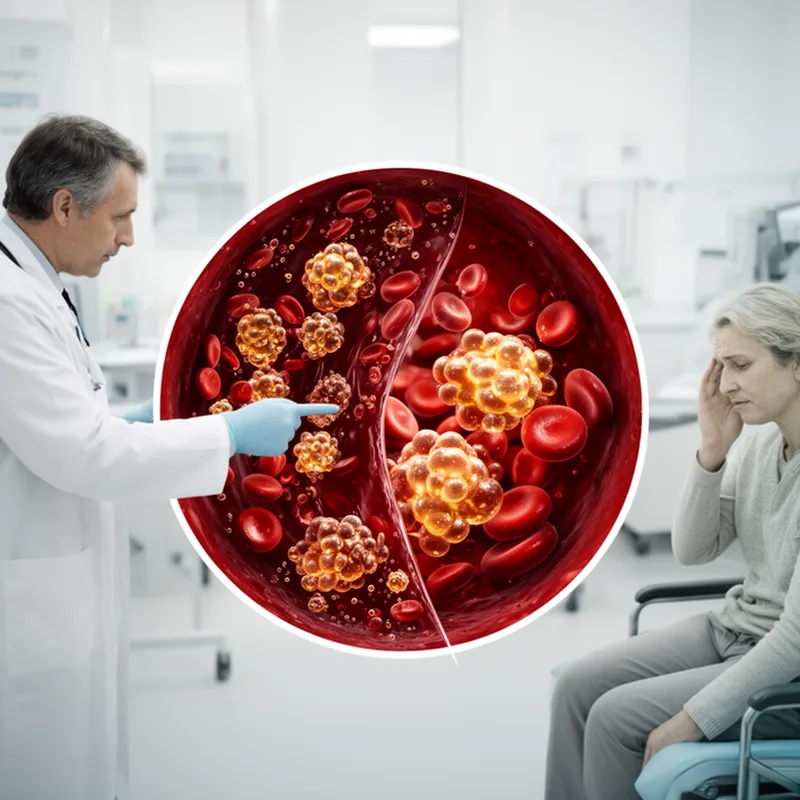
Macroglobulinemia breaks into the parts macro- meaning 'large', globulin a type of blood protein whose root is like globe meaning 'round', and -emia meaning 'blood'. So it means 'large proteins in the blood', which explains why the word names the condition of too much big protein in the blood.