
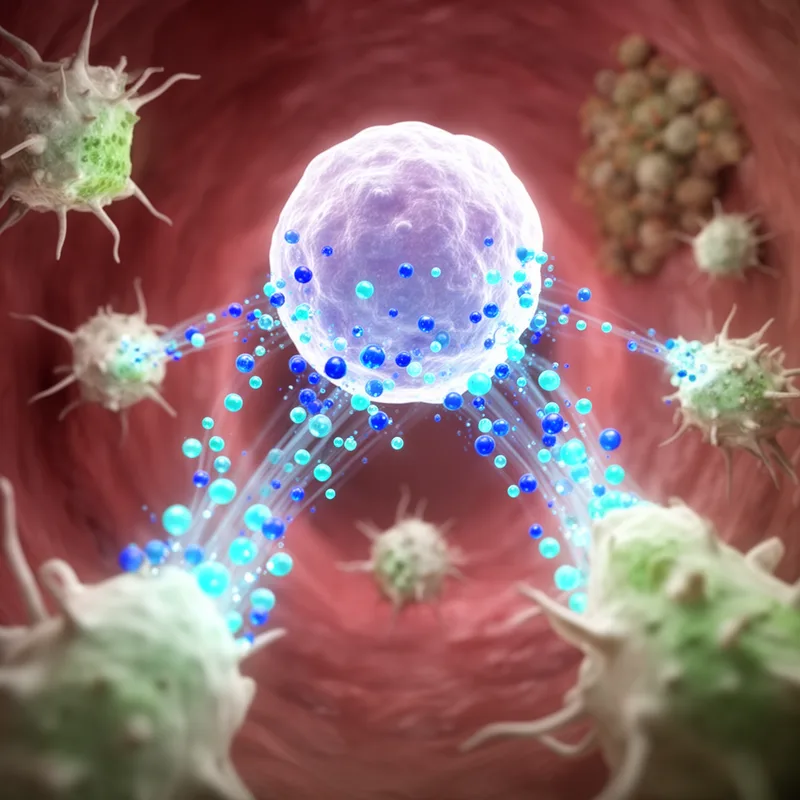
lymphokine


 1
9.9
- noun
- /ˈlɪmfəˌkaɪn/
- Specialized
- The study focused on the effects of different lymphokines on the behavior of immune cells.
Examples
-
Researchers are investigating how lymphokines influence the development of various immune cell types.
-
It inhibits T-cell secretion of some lymphokines, such as interferon-gamma and IL-2, and the result is a decrease in inflammatory activity.
Academic text (1991) -
The stimulated macrophages secrete chemotactic factors such as lymphokines, which then attract T-helper (T4) lymphocytes.
Academic text (2003) -
Lymphokines released by T-lymphocytes play a crucial role in regulating immune responses.
Synonyms
 12
8.2
A small protein made by cells that tells the immune system what to do
Surface Forms
Morphology
Etymology
The word lymphokine comes from two parts: lympho- meaning 'lymph' (the clear fluid that carries immune cells) and -kine meaning 'movement', as in kinetic. So a lymphokine is a chemical made by lymph cells that 'moves' or signals other immune cells to act.