

lunar day
- noun
- /ˈluːnər deɪ/
- Specialized
- The temperature on the moon varies greatly over the course of a lunar day.
Examples
-
A lunar day is much longer than an Earth day, lasting about 27.3 days.
-
Scientists measure one lunar day as the time it takes for the moon to complete a full rotation.
-
A lunar day lasts about 27.3 Earth days.
-
The lunar day is essential in astronomy.
-
A lunar day lasts approximately 27.3 Earth days, which is the time it takes the moon to complete one rotation on its axis.
-
Astronauts on the moon experience two weeks of continuous sunlight during a lunar day followed by two weeks of darkness.
-
Understanding the concept of a lunar day is crucial for planning long-term missions on the moon's surface.
Synonyms
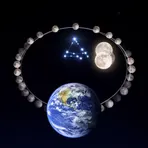
It takes about 27 days for the Moon to return to the same place among the stars
Surface Forms
Morphology
The meaning is compositionally predictable: 'lunar' = relating to the Moon and 'day' = a period of rotation, so a learner who knows both words can infer it refers to the Moon's day or period of rotation. The precise technical detail (27.3 sidereal days) is specialized, but the core sense is transparently derived from the constituents and follows common adjective + noun patterns.
Etymology
Lunar day comes from thinking of a day on the lunar surface: it is the time the moon takes to 'turn once' so the sun comes back to the same place on its surface. That's why a lunar day lasts about 27.3 days.

