
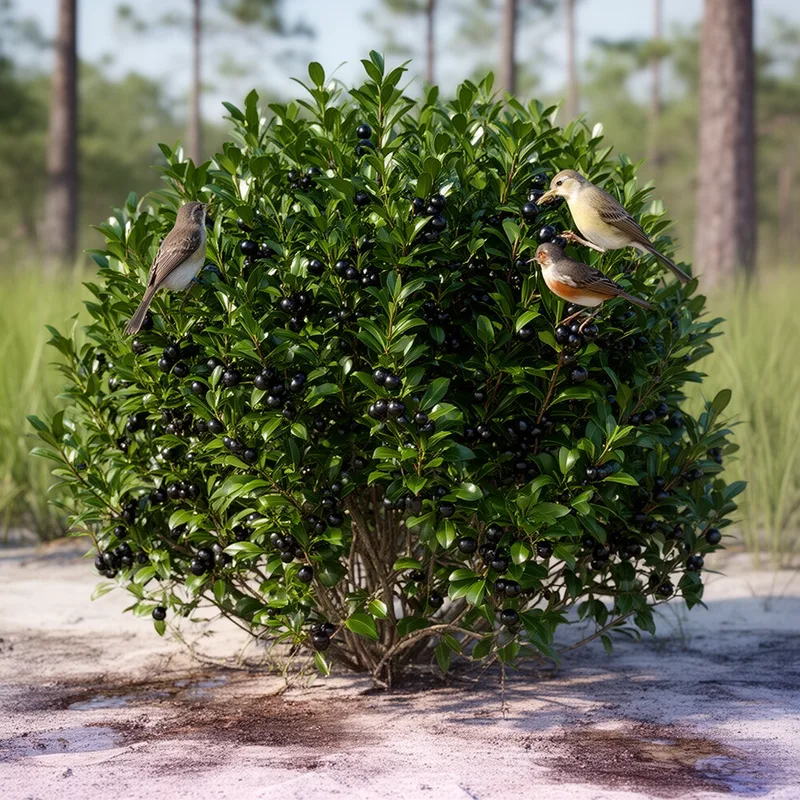
low gallberry holly
- noun
- US
- The low gallberry holly thrives in wet, sandy soils along the coastal plains of the southeastern United States.
Examples
-
The berries of the low gallberry holly provide food for birds throughout the winter.
-
Gardeners often plant low gallberry holly for its attractive evergreen foliage and wildlife benefits.
-
The low gallberry holly thrives in wetland areas.
-
Many gardeners love the low gallberry holly for its glossy leaves.
-
Many gardeners love the low gallberry holly for its glossy leaves and ability to attract wildlife.
-
The low gallberry holly thrives in wet, sandy soils, making it ideal for coastal gardens.
-
The berries of the low gallberry holly are an important food source for birds during the cold months.
Synonyms
An evergreen holly with thick long leaves and small black berries
A small evergreen bush with long thick leaves and black berries

An evergreen holly shrub with thick leaves and small black berries
An evergreen shrub from eastern North America with small black berries and thick leaves
Surface Forms
Morphology
The phrase denotes a type of holly (gallberry holly) that is low in stature, so its meaning—a low-growing gallberry/holly shrub—is directly composed from 'low' + 'gallberry' + 'holly'. Compound plant names like this follow straightforward compositional patterns found cross-linguistically, so a B1 learner who knows the constituent words can infer the overall referent.
Etymology
Low gallberry holly is a name that describes the plant: low means it stays short, gallberry points to the dark round berries, and holly shows it is an evergreen with shiny leaves. The berries look like drops of ink, so the plant is also called 'inkberry', and birds eat the black fruit in winter, which helps you remember this small shrub with glossy leaves and dark berries.

