

Ilex glabra
- noun
- Specialized
- Wildlife such as songbirds often feed on the berries produced by Ilex glabra in the winter.
Examples
-
The low, dense foliage of Ilex glabra makes it a popular choice for hedges in landscaping.
-
Gardeners value Ilex glabra for its resistance to pests and its attractive black berries.
-
The Ilex glabra is often found in wetlands.
-
Many gardeners prefer Ilex glabra for its hardiness.
-
Gardeners value Ilex glabra for its resistance to pests and its attractive black berries.
-
The low, dense foliage of Ilex glabra makes it a popular choice for hedges in landscaping.
-
Wildlife such as songbirds often feed on the berries produced by Ilex glabra in the winter.
Synonyms
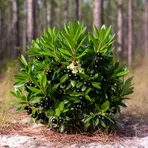
A small evergreen bush with long thick leaves and black berries

An evergreen holly shrub with thick leaves and small black berries
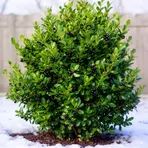
An evergreen shrub from eastern North America with small black berries and thick leaves

A low evergreen bush with glossy leaves and black berries that grows in the southeastern United States

An evergreen holly shrub from eastern North America with oblong leathery leaves and small black berries
Surface Forms
Morphology
Ilex + glabra
This is a Latin binomial: the first element 'Ilex' names the holly genus, so a learner who knows the constituents can at least infer it is a kind of holly. However the species epithet 'glabra' is a Latin form (not a productive English word) and does not convey the specific common-name features (inkberry, evergreen shrub with black berries) to a B1 learner, so the full meaning is not predictable.
Etymology
Ilex glabra is the scientific name for the plant commonly called inkberry holly. One popular story says its very dark berries were once used to make a black dye like 'ink', and the parts Ilex as a kind of 'holly' and glabra meaning 'smooth' describe the plant, so the name helps you remember its shiny leaves and dark berries.

