
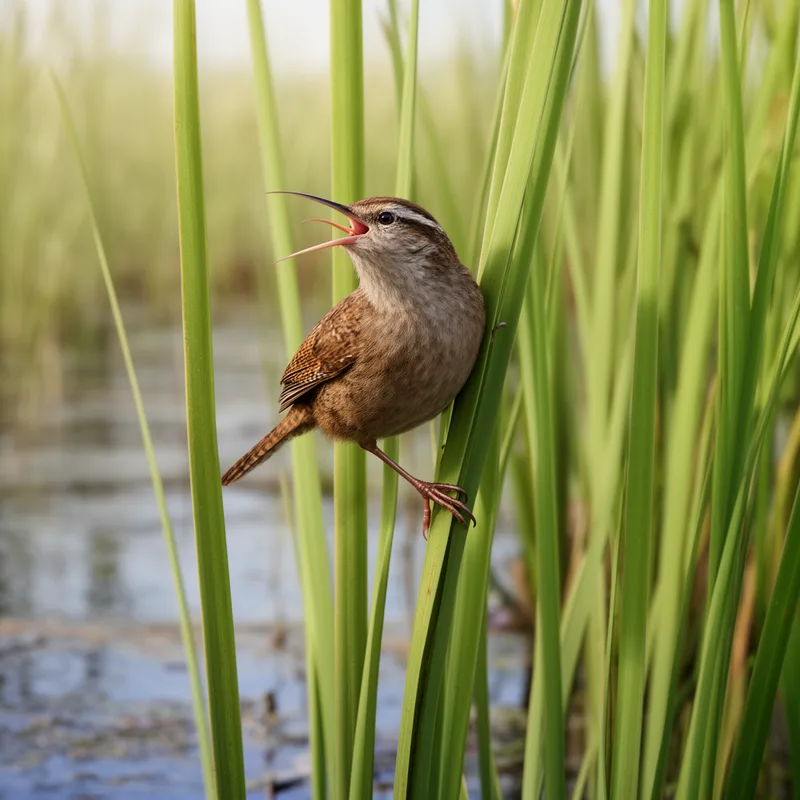
long-billed marsh wren
- noun
- /lɔŋ bɪld mɑrʃ rɛn/
- US
- The long-billed marsh wren is often heard singing among the cattails in spring.
Examples
-
The long-billed marsh wren can often be found foraging for insects in its marshy habitat.
-
We spotted a long-billed marsh wren as we walked along the wetlands boardwalk.
-
Conservation efforts have helped to protect the habitat of the long-billed marsh wren.
-
The long-billed marsh wren is known for its distinctive call.
-
Have you ever seen a long-billed marsh wren in the wild?
-
While exploring the wetlands, we were delighted to see a long-billed marsh wren hopping among the reeds.
-
During our birdwatching trip, we identified the familiar song of the long-billed marsh wren echoing through the tall grass.
Synonyms
A small brown bird that sings and lives in tall reeds and marshes in North America

A small songbird that lives in marshes and sings a loud bubbling song
Surface Forms
Morphology
The phrase is fully compositional: 'long-billed' (having a long bill) + 'marsh' (wetland) + 'wren' (a small bird) yields the meaning 'a wren with a long bill that lives in marshes.' This descriptive compound follows standard adjective+noun+noun patterns found across languages, so a B1 learner who knows the constituents can readily infer the MWE's meaning.
Etymology
The name long-billed marsh wren simply describes the bird: long-billed means it has a long beak, marsh means it lives in wet reed beds, and wren is a small songbird. So the name points to 'a small songbird' with a long bill that lives in a 'marshy habitat'.

