
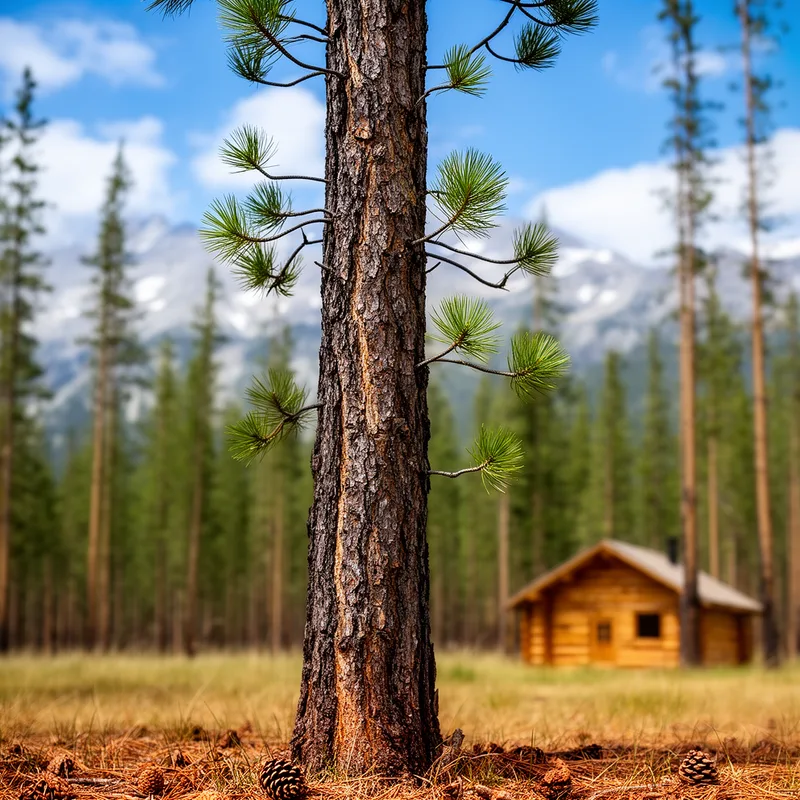
lodgepole pine
 1
7.6
1
7.6

- noun
- /ˈlɒdʒˌpoʊl paɪn/
- Specialized
- During our hike, we encountered several lodgepole pines, their branches adorned with clusters of long needles.
- lodgepole pine forest
- stands of lodgepole pine
- lodgepole pine log
Examples
-
Forest types with the most burned acreage were ponderosa pine, lodgepole pine, and Douglas-fir.
Academic text (2017) -
The lodgepole pine is known for its tall, slender trunk and distinctive bark that can vary in color from red to yellow-brown.
-
I looked out my kitchen window at lodgepole pine branches heavy with snow.
Fiction book (1993) -
Just thousands of acres of forests of ponderosa and lodgepole pine, prime habitat for mountain lions and bears.
Academic text (2009) -
A mountain pine beetle epidemic has decimated lodgepole pine stands from Colorado to Canada.
Blog text (6) -
About half a mile away, an elk plowed through the chest-deep snow, browsing on lodgepole pine needles.
Academic text (1991) -
The basin consists of a flat plain interspersed with meadows and stands of lodgepole pines, with the Firehole River flowing through the central part of the basin.
Academic text (2009) -
But new developments in the Red Zones are increasingly at elevations above 8,000 feet, in dense forests that are often dominated by lodgepole pine, which tends to burn heavily in "stand-reducing" crown fires.
Blog text (24) -
For example, lodgepole pine (Pinus contorta var. latifolia) is well known for having serotinous cones that release their seed when heated.
Academic text (1997) -
In the Rocky Mountains, lodgepole pine trees can be found covering large areas, offering shelter to various wildlife.
Synonyms
 130
1.0
130
1.0
An evergreen tree with long needle leaves and cones
 25
1.0
25
1.0
A tall evergreen tree with needle leaves and cones
 3
9.9
3
9.9
A pine tree with two needles in each cluster that grows in western North America
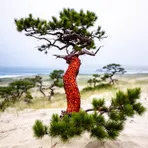
A pine tree from the northwest coast of North America with needles in pairs and reddish scaly bark
Surface Forms
Morphology
The compound is compositional: 'lodgepole' specifies a particular kind or characteristic and 'pine' names the tree, so the phrase denotes a type of pine with lodgepole features. This noun+noun taxonomic naming pattern is common across languages and follows straightforward composition, so a B1 learner who knows both constituents would readily infer the meaning.
Etymology
Lodgepole pine gets its name from how people used the tree: its tall, straight trunks were used as lodge poles to build 'tents' or simple houses. That's why the tree is called lodgepole pine today.