
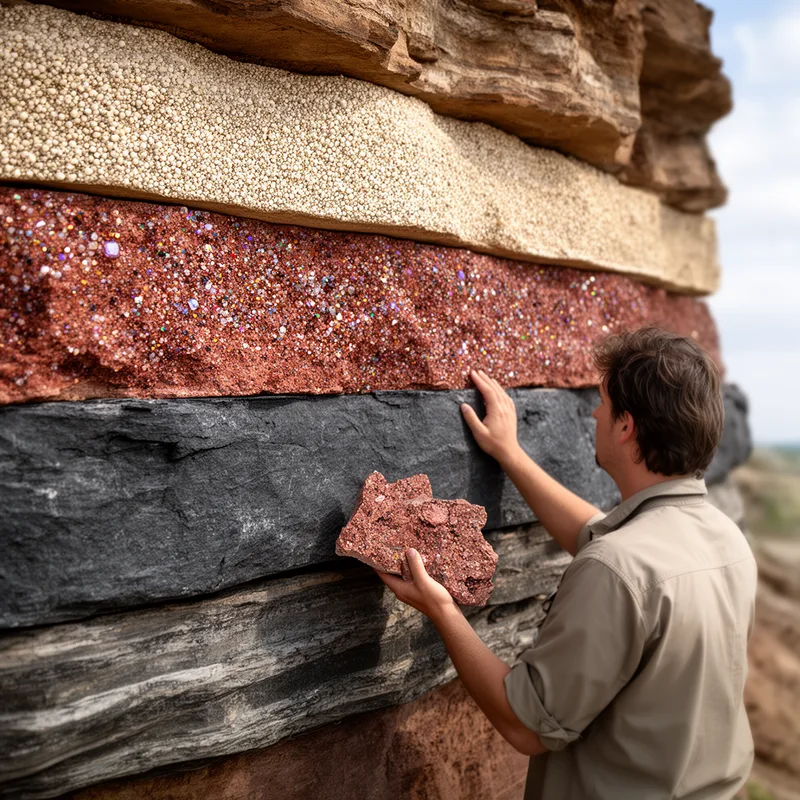
lithologic
- adjective
- /ˌlɪθəˈlɒdʒɪk/
- Specialized
- A detailed lithologic analysis can reveal important information about past environments.
Examples
-
Mapping the lithologic units helps geologists understand the structure of the Earth's crust.
-
The lithologic features of the area indicate volcanic activity.
-
The lithologic differences between the two regions suggest a varied geological history.
-
Geologists study the lithologic properties of sedimentary rocks.
-
Geologists often classify rocks based on their lithologic properties, like color and texture.
-
The lithologic features of the mountain provide insights into its geological history.
-
Understanding the lithologic composition of the area can help in predicting natural resources.
Synonyms

About the physical type and what rocks are made of
How Rocky


Surface Forms
Morphology
Etymology
Lithologic comes from the Greek root litho- meaning 'stone', the same root you see in monolith and lithosphere. So lithologic means 'about stones or rocks' and is used to describe the physical features or what rocks are made of.