
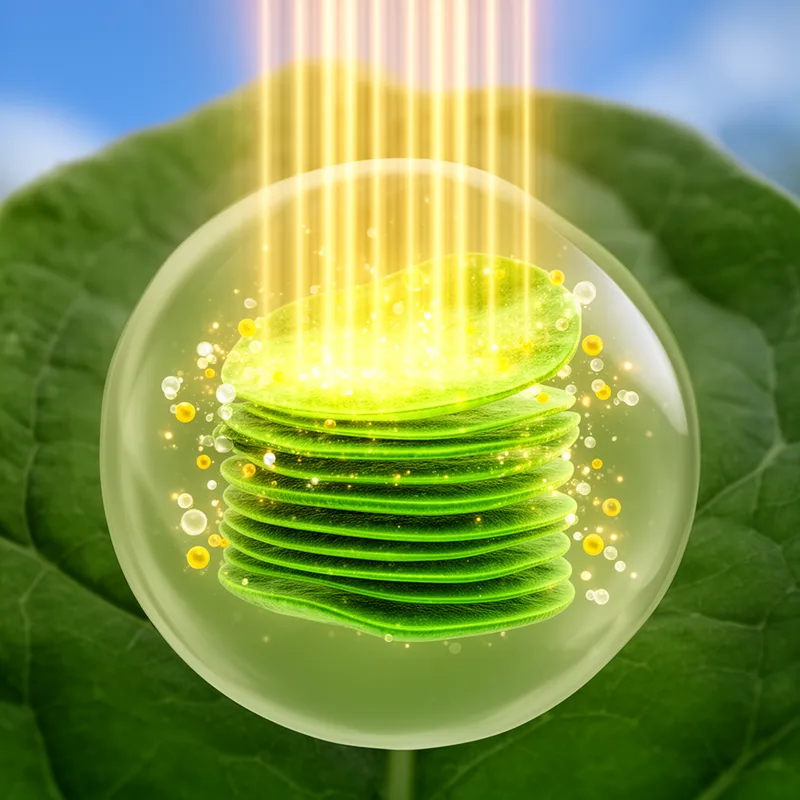
light reaction
- noun
- /laɪt ˈriːækʃən/
- Specialized
- In plants, the light reaction occurs in the thylakoid membranes and requires sunlight.
Loading YouTube…
Watch on YouTubeIs this process used by photosynthetic organisms where they can use the light reactions of photosynthesis to make both ATP and NADPH?
- Is this process used by photosynthetic organisms where they can use the light reactions of photosynthesis to make both ATP and NADPH?
Examples
-
Is this process used by photosynthetic organisms where they can use the light reactions of photosynthesis to make both ATP and NADPH?
-
And so light reactions here at the thylakoid membrane within the chloroplast, dark reactions here in the stroma of the chloroplast.
-
You can lead a class discussion on electron bounce, the role and composition of photosystems 1 and 2, and the porphyrin cyclic structures of various chlorophyll molecules involved in the light reaction.
Academic text (2002) -
The light reaction produces ATP and other energy-rich compounds during photosynthesis.
-
During the light reaction, chlorophyll absorbs sunlight to initiate the process of energy conversion.
Synonyms
A process in plants and some bacteria that uses light to make the energy molecule ATP
Surface Forms
Morphology
The phrase denotes a chemical reaction that involves or is driven by light, so its basic meaning ('a reaction involving light') is directly derivable from the constituents 'light' and 'reaction'. While the full technical details (ATP production, thylakoid membranes) require biology knowledge, a B1 learner who knows both words will grasp the general concept; similar compound logic exists in many languages, supporting transparent interpretation.
Etymology
Light reaction — The name light reaction comes from the simple picture of a reaction, a chemical change, driven by light. It is the 'first stage' of photosynthesis, the process plants use to make food, where sunlight makes molecules change to 'store energy', so the name tells you what it does.

