
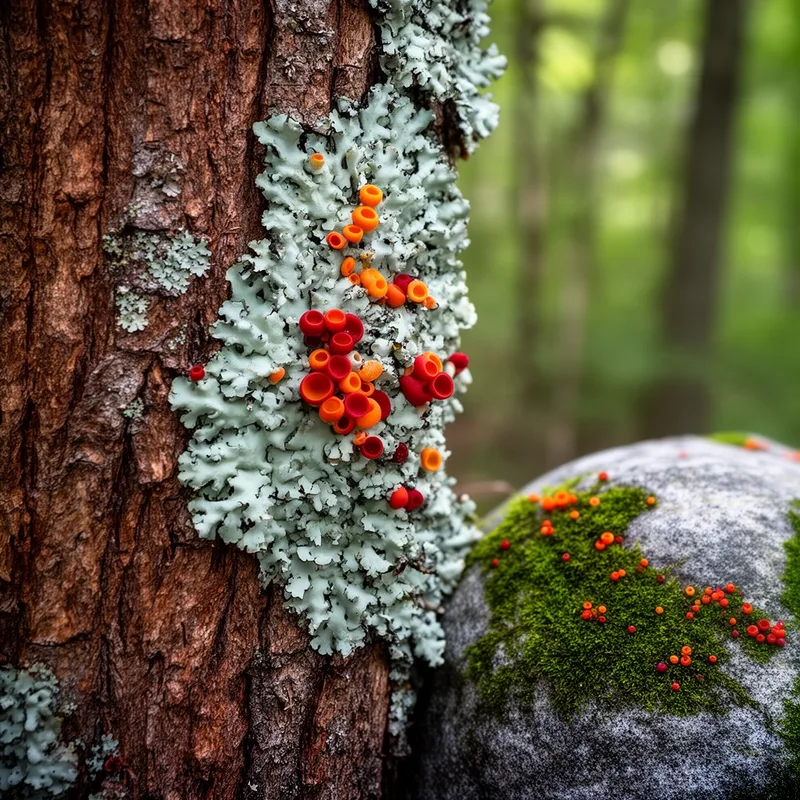
lichenicolous


 1
9.9
- adjective
- /ˌlaɪkəˈnɪkələs/
- Specialized
- lichenicolous fungi
Examples
-
In all, 600 lichens and 82 lichenicolous and allied fungi have been recorded from Eagle Hill Institute and its vicinity.
Academic text (2017) -
Seven taxa (1 lichen and 6 lichenicolous fungi) are additional to the North American checklist (cf. Esslinger 2017); notes on these and some other interesting taxa are provided.
Academic text (2017) -
There are several records of this lichenicolous basidiomycete from Maine, as well as Matane, QC, Canada, in the NYBG (2017) database collected by William Buck or Richard Harris on Platismatia glauca.
Academic text (2017) -
Some species of lichenicolous fungi can only thrive on specific types of lichens.
-
The lichenicolous organisms contribute to the complex ecosystem of the lichen community.
-
Researchers discovered a new lichenicolous species that grows exclusively on rock-dwelling lichens.
Surface Forms
Morphology
Etymology
Lichenicolous is made from lichen (the small, plant-like organism you see on rocks and trees) and the ending -colous, which means 'living on' or 'dwelling among'. So, lichenicolous describes organisms that live on or grow with lichens.