

leper lily
- noun
- /ˈlɛpər ˈlɪli/
- UK
- The leper lily blooms in early spring, adding a touch of elegance to the garden with its checkered petals.
Examples
-
Gardeners often choose the leper lily for shady spots because of its unique, nodding flowers.
-
The medieval legend says the leper lily was named for its resemblance to the bells carried by lepers.
-
The leper lily blooms beautifully in spring.
-
Many gardeners love the unique look of leper lilies.
-
Gardeners often choose the leper lily for shady spots because of its unique, nodding flowers.
-
The leper lily blooms in early spring, adding a touch of elegance to the garden with its checkered petals.
-
The medieval legend says the leper lily was named for its resemblance to the bells carried by lepers.
Synonyms
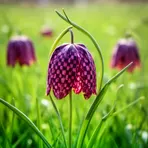
A small European lily with bell-shaped purple or maroon checkered flowers
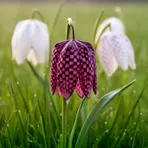
A spring bulb flower with hanging checkered purple or maroon petals

A plant with bell-shaped flowers that hang down and show a checkered pattern
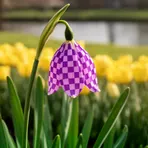
A garden flower with hanging bell-shaped petals patterned with purple checks
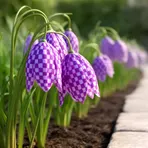
A garden plant with hanging bell-shaped flowers that are purple and white in a checkered pattern
Surface Forms
Morphology
The noun phrase is compositionally transparent: a B1 learner who knows 'leper' and 'lily' can infer this refers to a type of lily associated with lepers (i.e. a lily named for or linked to lepers). While the detailed botanical identity and historical explanation are not predictable from the parts, the basic denotation 'a kind of lily related to lepers' is directly derivable from the constituents.
Etymology
Leper lily comes from a story long ago: people thought the plant's nodding, checkered flowers looked like the small bells that lepers once carried. So the name links the plant to that image and now means this kind of lily.

