

Fritillaria meleagris
- noun
- Specialized
- The Fritillaria meleagris is prized by gardeners for its distinctive checkered flowers.
Examples
-
In spring, the meadow blooms with Fritillaria meleagris, adding a touch of wild beauty.
-
Many gardeners love the Fritillaria meleagris for its unique flowers.
-
Botanists admire Fritillaria meleagris for its unusual coloration and historical associations.
-
The Fritillaria meleagris blooms beautifully in spring.
-
Gardeners often choose Fritillaria meleagris for its striking purple, checkered flowers that enhance any garden.
-
During the spring, Fritillaria meleagris blooms in meadows, showcasing its beautiful bell-shaped flowers.
-
The unique pattern of the Fritillaria meleagris makes it a favorite among floral enthusiasts.
Synonyms


 1
9.9
1
9.9
A small bulb plant with nodding bell-shaped flowers, often with checkered petals

A plant with nodding bell-shaped flowers that are often purple and checkered
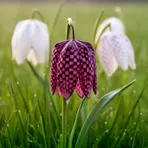
A spring bulb flower with hanging checkered purple or maroon petals
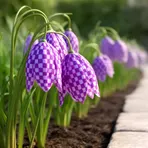
A garden plant with hanging bell-shaped flowers that are purple and white in a checkered pattern
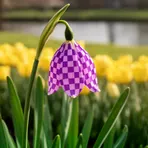
A garden flower with hanging bell-shaped petals patterned with purple checks

A plant with bell-shaped flowers that hang down and show a checkered pattern
Surface Forms
Morphology
Fritillaria + meleagris
This is a Latin binomial: knowing 'Fritillaria' (a genus of flowering plants) lets a learner infer that the phrase names a species of that plant, so they can grasp the general category (a plant). However 'meleagris' is not an English lexical item with an accessible meaning for a B1 learner, and the specific traits (checkered, bell-shaped flowers, Eurasian distribution) are not derivable from the constituents. Because the name signals category but not the detailed meaning, it is only partially transparent.
Etymology
Fritillaria meleagris may come from old words that describe the flower's look. The first part, fritillaria, comes from 'fritillus' meaning 'dice-box' because the petals have a checkered pattern, and meleagris links to 'guineafowl' because the spots look like a bird's feathers, so the name helps you remember its checkered, bell-shaped flower.