

leatherback turtle


 1
5.0
1
5.0
- noun
- /ˈlɛðərˌbæk ˈtɜːrtl/
- A leatherback turtle conservation program initiated by VDT has expanded with VDT assistance but is now under the control of a village committee working jointly with the Marine Research Foundation.
Examples
-
I called Mass Audubon and reported the stranded leatherback turtle.
Blog text (5) -
PHOTO (COLOR): Figure 3: Leatherback turtles, an endangered species, frequently nest on Kamiali beaches.
Academic text (2007) -
The leatherback turtle is the largest living turtle, often reaching over 6 feet in length.
-
Conservationists work hard to protect the leatherback turtle, which is listed as an endangered species.
-
I was thrilled to see a leatherback turtle swimming gracefully in the ocean during my vacation.
Synonyms
 2
7.0
2
7.0
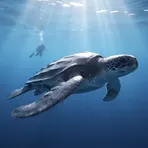
A very large sea turtle with a flexible, soft shell
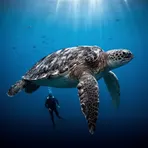
A very large sea turtle with a soft, leathery shell that is the biggest living turtle

A very large sea turtle with a soft, flexible shell instead of hard plates
Surface Forms
Morphology
The meaning 'a large marine turtle with a leathery, flexible shell' is directly and compositionally built from the constituents: 'leather(-back)' describes the shell quality and 'turtle' names the animal. This is a straightforward descriptive compound following common English modifier+noun patterns (and similar forms exist cross-linguistically), so a B1 learner who knows the parts should infer the meaning.
Etymology
Leatherback turtle: The name leatherback turtle comes from the animal's shell, which looks like thick, dark leather on its back instead of a hard shell, so people used the words leather and back to describe it. So the name helps you remember it is a 'large sea turtle' with a soft, flexible shell.