

leafy spurge
 1
9.8
1
9.8

- noun
- /ˈliːfi spɜrdʒ/
- Specialized
- "There is no question that biological control will be a key to long-term control of leafy spurge," says Neal R. Spencer, an entomologist who leads research at ARS' Northern Plains Agricultural Research Station in Sidney, Montana.
- weeds, such as leafy spurge
- leafy spurge control
- leafy spurge flea beetle
Loading YouTube…
Watch on YouTubeSo if you feed sheep leafy spurge for a while, yeah.
- So if you feed sheep leafy spurge for a while, yeah.
Examples
-
An insect that loves to eat leafy spurge, a range weed now infesting 2.5 million acres on the Northern Plains, may bring some relief to farmers and ranchers.
Academic text (1994) -
Research by Walker and others has shown that sheep can be used to manage noxious weeds, such as leafy spurge, spotted knapweed, and tall larkspur.
Academic text (1995) -
They also set up 30 test sites for leafy spurge control, some on reservations.
Academic text (1994) -
ARS began research on biological control of leafy spurge in the 1970s at laboratories in California, Montana, and Italy.
Academic text (2000) -
Researchers at this laboratory helped discover and test agents for control of leafy spurge and saltcedar—today's emerging success stories.
Academic text (2000) -
Today the lab works on agents to control saltcedar, leafy spurge, several aquatic weeds, and some insect pests.
Academic text (2000) -
First identified in the United States in 1827, leafy spurge (Euphorbia esula) now infests at least 5 million acres in 35 states and Canadian provinces.
Academic text (2000) -
Major weed targets now include leafy spurge, saltcedar, Russian and yellow starthistle, Russian knapweed, and perennial mustards such as hoary cress.
Academic text (2000) -
The farmer struggled to control the spread of leafy spurge after it invaded his pasture and outcompeted native plants.
-
In our biology class, we learned about how leafy spurge can harm local ecosystems by reducing biodiversity.
Synonyms

A tall plant from Europe and Asia that lives for many years and spreads like a weed in North America
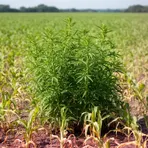
A tall weed with many leaves that spreads quickly and harms crops
Surface Forms
Morphology
This is a straightforward adjective + noun compound: 'leafy' modifies 'spurge', so a learner who knows 'spurge' (a kind of plant) will infer it denotes a spurge with abundant leaves. The meaning is compositionally derived following a common cross-linguistic pattern, so it is immediately understandable to a B1 learner who knows the constituents.
Etymology
Leafy spurge: The name leafy spurge comes from the plant's look: leafy points to its many green leaves and spurge is a group of plants with a sticky white sap that was used in old medicine. Because it spreads fast and crowds out other plants, it became known as a troublesome 'weed'.