

leaf beet
- noun
- /liːf biːt/
- The chef sautéed leaf beet with garlic for a flavorful side dish.
Examples
-
Unlike beets grown for their roots, leaf beet is valued for its nutritious leaves.
-
In the garden, leaf beet thrives in cooler weather and produces abundant greens.
-
I love to eat leaf beet in my salads.
-
My grandmother grows leaf beets in her garden.
-
In the garden, leaf beet thrives in cooler weather and produces abundant greens.
-
The chef sautéed leaf beet with garlic for a flavorful side dish.
-
Unlike beets grown for their roots, leaf beet is valued for its nutritious leaves.
Synonyms

 8
4.8
8
4.8

A leafy vegetable with large green leaves and thick stems eaten cooked or raw
 3
3.0
3
3.0
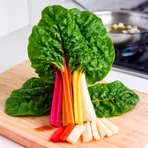
A leafy green vegetable with large leaves and thick colorful stalks

A leafy green vegetable with large edible leaves and thick stalks used like spinach
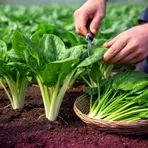
A leafy vegetable grown for its leaves and stalks instead of its root
Surface Forms
Morphology
Etymology
Leaf beet joins leaf and beet: it is a plant related to the beet whose large green leaves and thick stalks are eaten instead of the root. So, the name means a vegetable (also called 'Swiss chard') grown for its edible leaves and stems.