
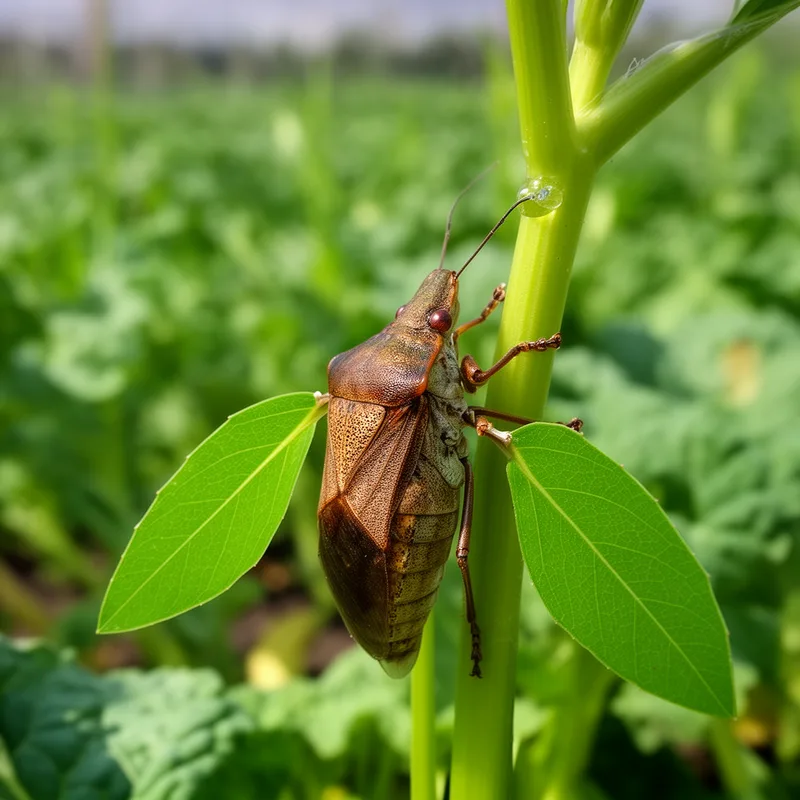
leaf-foot bug
- noun
- The leaf-foot bug can be easily identified by the flat, leaflike structures on its hind legs.
Examples
-
Leaf-foot bugs often feed on the sap of various plants, sometimes damaging crops.
-
The leaf-foot bug is often found on plants.
-
Gardeners sometimes mistake the leaf-foot bug for other types of plant pests.
-
Have you ever seen a leaf-foot bug before?
-
The leaf-foot bug can be easily identified by the flat, leaflike structures on its hind legs.
-
Gardeners sometimes mistake the leaf-foot bug for other types of plant pests.
-
Leaf-foot bugs often feed on the sap of various plants, sometimes damaging crops.
Synonyms

A large insect that feeds on plant juices and has leaf-shaped parts on its back legs

An insect with leaf-like parts on its back legs that often lives on plants
A bug with a long body and often widened hind legs that feeds on plants
Surface Forms
Morphology
leaf-foot + bug
The noun is a straightforward descriptive compound: 'leaf' + 'foot' + 'bug' transparently describes a bug with leaf‑like expansions on its feet/legs, matching the provided definition. This kind of compositional, attributive compound follows regular English patterns (and similar descriptive patterns cross-linguistically), so a B1 learner who knows the constituent words can infer the meaning.
Etymology
Leaf-foot bug is named for the flat, leaf-like parts on its hind legs: the leaf part points to the shape and the foot part refers to the leg. Because these leaf-shaped parts are easy to see, the name helps you remember this large insect that feeds on plant sap.

