
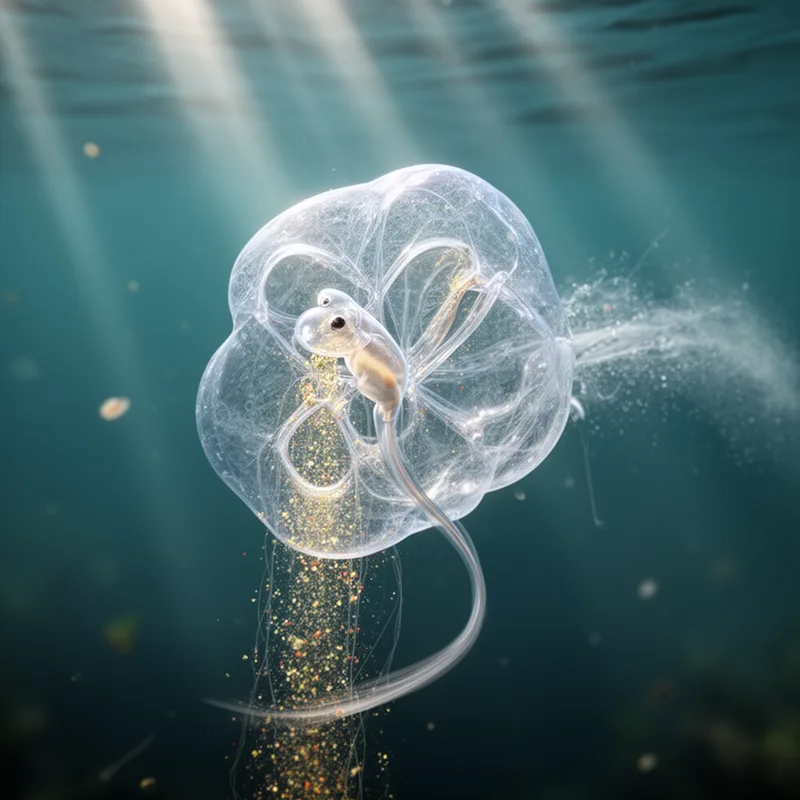
larvacea
- noun
- /lɑːrˈveɪʃə/
- Specialized
- Some species of larvacea build mucous 'houses' that help them trap and eat plankton.
Examples
-
Marine biologists study larvacea to understand how these tunicates filter food particles from seawater.
-
Did you know that larvacea can be found in both tropical and temperate waters?
-
The transparent body of the larvacea makes it difficult to spot in open ocean research.
-
The larvacea are fascinating creatures found in many oceans.
-
Marine biologists study larvacea to understand how these tunicates filter food particles from seawater.
-
Some species of larvacea build mucous 'houses' that help them trap and eat plankton.
-
The transparent body of the larvacea makes it difficult to spot in open ocean research.
Synonyms
A very small sea animal that keeps its tadpole-like young body and filters tiny particles
Surface Forms
Morphology
Etymology
Larvacea comes from the Latin larva, which meant 'mask' or 'ghost' and later was used for a young form of an animal. So larvacea names small, often transparent sea animals that keep a 'young' or larval look, and that is why the name fits their appearance.

