

large white
- noun
- UK
- The large white is a familiar sight in European gardens during the summer months.
Examples
-
Look at that large white resting on the flower!
-
She photographed a large white resting on a kale leaf.
-
Farmers often consider the large white a pest due to its larvae feeding on cabbages.
-
I saw a beautiful large white fluttering in the garden.
-
We spotted a large white butterfly fluttering around the garden, attracted by the flowers.
-
The farmer had to use insecticides to protect his crops from the large white caterpillars.
-
During spring, the large white butterfly can often be seen basking in the sun on the paths.
Synonyms

A large white butterfly whose caterpillars eat cabbage and other garden plants
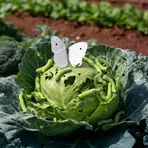
A small white butterfly whose caterpillars eat cabbage and other garden plants
How Big


Surface Forms
Morphology
The phrase is a straightforward attributive combination: 'large' + 'white' describes size and colour, so a B1 learner who knows both words will infer it denotes a large white thing — in context (resting on a flower) clearly a butterfly. This adjective + colour composition is common cross-linguistically and follows normal English noun-phrase reduction (e.g. 'a small brown' = a small brown animal), so the meaning is directly derivable from the constituents.
Etymology
Large white comes from a simple picture: the butterfly is fairly big and mostly white, so people used the words large and white to tell it apart from smaller white butterflies. Farmers also noticed its caterpillars eating cabbages, so the name stuck for the insect we now call the 'large white'.