

large-toothed aspen
- noun
- /lɑrdʒ-tuːθd ˈæspən/
- Specialized
- The large-toothed aspen is commonly found in the forests of eastern Canada and the United States.
Examples
-
The distinctive leaves of the large-toothed aspen make it easy to identify in the wild.
-
In autumn, the large-toothed aspens turn a beautiful yellow.
-
Logging companies sometimes harvest large-toothed aspen for use in pulpwood and lumber.
-
The large-toothed aspen is found mainly in Canada.
-
The large-toothed aspen is commonly found in the forests of eastern Canada and the United States.
-
The distinctive leaves of the large-toothed aspen make it easy to identify in the wild.
-
In autumn, the large-toothed aspen turns a beautiful yellow.
Synonyms

A tree with large leaves that have rough edges and a narrow top
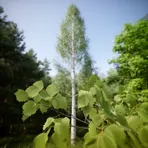
A tree with large jagged leaves and a narrow crown that grows in eastern North America

A tree with leaves that have big teeth and a narrow top native to eastern North America

A tree from eastern North America with large leaves that have rough edges and light bark
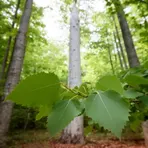
A tree with a narrow top and large toothed leaves native to eastern North America
Surface Forms
Morphology
large-toothed + aspen
The phrase is directly compositional: 'large-toothed' can be analyzed as 'large' + 'toothed' (having large teeth or tooth-like leaf margins) modifying 'aspen' (a type of tree), so the meaning is an aspen with large/coarsely toothed leaves. This adjective–noun compounding follows ordinary English patterns and is cross-linguistically transparent, so a B1 learner who knows the constituents would readily infer the MWE's meaning.
Etymology
Large-toothed aspen is named for its big leaves that have large, tooth-like edges. Here large-toothed points to the leaf 'teeth' and aspen is the kind of tree. So the name tells you it is an aspen with big toothed leaves, which makes it easy to 'identify'.

