
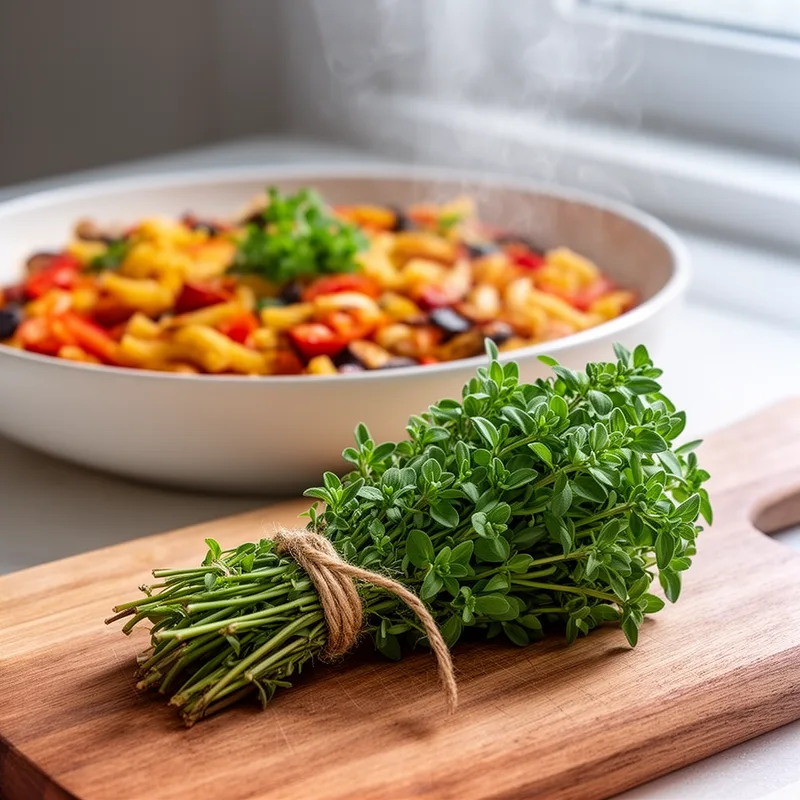
knotted marjoram
- noun
- /ˈnɑːtɪd ˈmɑːrdʒərəm/
- Fresh knotted marjoram adds a distinct flavor to Mediterranean dishes.
Examples
-
The bouquet garni recipe called for a sprig of knotted marjoram among other herbs.
-
They grow knotted marjoram in their garden for culinary use.
-
I love adding knotted marjoram to my pasta dishes.
-
Have you tried knotted marjoram in your salads?
-
Fresh knotted marjoram adds a distinct flavor to Mediterranean dishes.
-
The bouquet garni recipe called for a sprig of knotted marjoram among other herbs.
-
They grow knotted marjoram in their garden for culinary use.
Synonyms

 3
6.5
3
6.5

An herb with small leaves like oregano used to add flavor to food
An aromatic herb like oregano from the Mediterranean used to flavor food
A small herb with a mild sweet taste and pleasant smell used in cooking

A fragrant herb with small leaves used to flavor food
Surface Forms
Morphology
The noun phrase combines 'knotted' (having knots or clustered parts) with 'marjoram' (a culinary herb), so a B1 learner who knows both constituents can infer it refers to a type or form of marjoram with knotted/clustered leaves. This is a straightforward adjectival modification of a noun following normal English composition patterns, making the meaning directly derivable from the parts.
Etymology
Knotted marjoram got its name because people used to twist and tie its short stems into little knots, keeping the tiny leaves in a tight bunch. That's why the name refers to this small aromatic herb 'used in cooking'.