
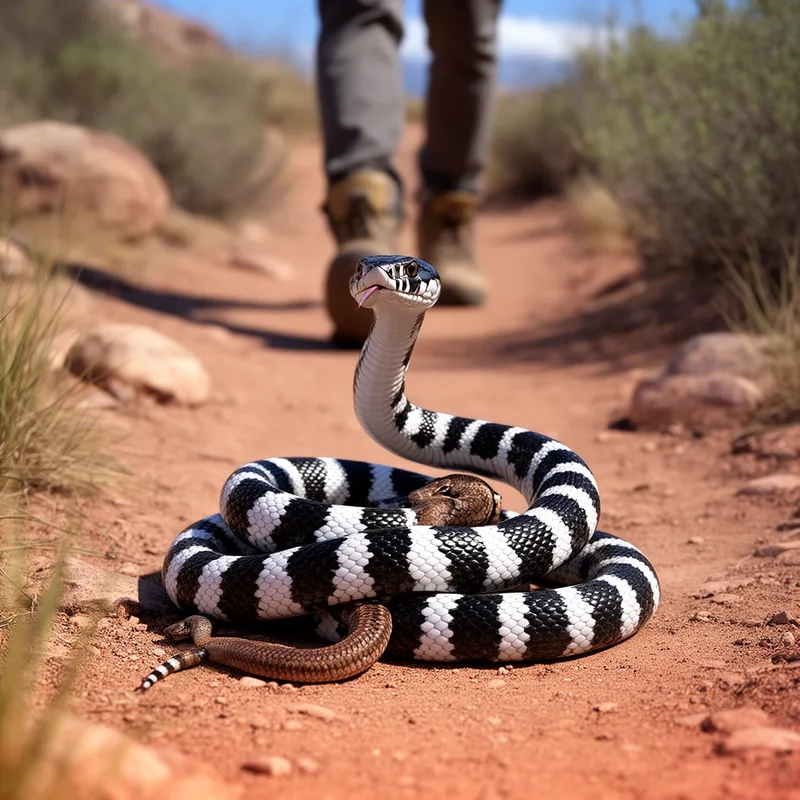
king snake


 1
5.8
1
5.8
- noun
- /kɪŋ sneɪk/
- US
- During our hike, we spotted a beautiful king snake slithering through the grass.
- banded king snake
Examples
-
The king snake is known for its ability to eat other snakes in the wild.
-
Willie took one look and said, "That's a king snake!"
Fiction book (1993) -
"A king snake?" He explained to me that a king snake was the worst snake to kill because they had plenty of relatives and that they were going to get me.
Fiction book (1993) -
"A king snake?" He explained to me that a king snake was the worst snake to kill because they had plenty of relatives and that they were going to get me.
Fiction book (1993) -
He explained that the king snake was the most vengeful snake there was.
Fiction book (1993) -
The pet store had a variety of reptiles, including a striking king snake with bright colors.
Synonyms
 1
6.9
1
6.9
A North American snake that is not venomous and squeezes its prey, often eating other snakes

A group of snakes from the Americas that are not poisonous, like king and milk snakes
Surface Forms
Morphology
A B1 learner who knows 'king' and 'snake' will readily infer this denotes a type of snake and that 'king' signals prominence or dominance (so a notable or dominant snake). However, the precise biological facts—its nonvenomous status, genus Lampropeltis, and diet of other snakes—are not predictable from the constituents alone, so the expression is only partly compositional.
Etymology
King snake comes from the clear image that this snake is like a king among other snakes because it often eats them. That's why the name means a snake that eats other snakes and is usually 'not poisonous'.