
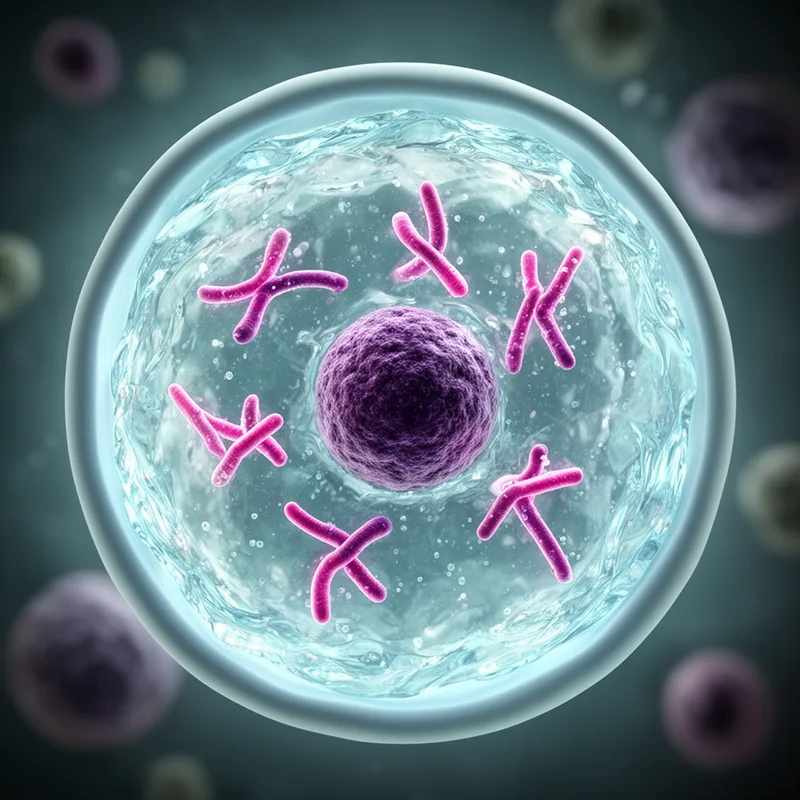
karyoplasm
- noun
- /ˈkɛr.i.oʊ.plæz.əm/
- Specialized
- The karyoplasm contains the nucleolus and chromatin material inside the cell nucleus.
Examples
-
Researchers isolated the karyoplasm to study the nuclear enzymes.
-
Changes in the karyoplasm can indicate various cellular diseases.
-
The karyoplasm contains the cell's genetic material.
-
In the study of cells, karyoplasm plays a crucial role.
-
The karyoplasm contains the nucleolus and chromatin material inside the cell nucleus.
-
Changes in the karyoplasm can indicate various cellular diseases.
-
Researchers isolated the karyoplasm to study the nuclear enzymes.
Synonyms

The soft liquid inside a cell's nucleus that holds chromosomes and other parts
A clear fluid inside a cell's nucleus that holds parts like the nucleolus and chromatin
Surface Forms
Morphology
Etymology
Karyoplasm comes from Greek parts karyo- meaning 'kernel' or 'nucleus' and -plasm meaning 'formed substance', and the plasma part is the same word you see in 'blood plasma'. So karyoplasm is the 'formed substance' inside the cell's 'kernel' or nucleus, which is why it names the material found there.

