

jaggery palm
- noun
- Indian
- The sap of the jaggery palm is traditionally collected to make a sweet brown sugar.
Examples
-
The pith of the jaggery palm is processed to extract sago starch used in cooking.
-
In several villages, the jaggery palm provides both food and income for local families.
-
The jaggery palm is native to South Asia.
-
Many farmers cultivate jaggery palms for their sap.
-
In several villages, the jaggery palm provides both food and income for local families.
-
The pith of the jaggery palm is processed to extract sago starch used in cooking.
-
The sap of the jaggery palm is traditionally collected to make a sweet brown sugar.
Synonyms
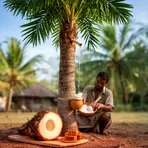
A palm tree with fishtail leaves grown for its sap and the soft inside of its trunk that is eaten

A tall palm tree whose sweet sap makes brown sugar and whose soft inner trunk gives sago

A tall palm that gives sago from its trunk and sweet sap used to make sugar
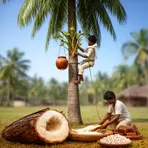
A palm tree whose sap is used to make brown sugar and whose trunk gives sago
Surface Forms
Morphology
The compound is compositionally formed: 'jaggery' (unrefined sugar) modifying 'palm' (a tree) yields the straightforward meaning 'a palm tree associated with jaggery production.' This follows regular noun+noun compounding patterns and would be inferable to a B1 learner who knows both constituents, even if the specific species name is unfamiliar.
Etymology
Jaggery palm gets its name from the tree's sweet sap. People tap the palm and boil the sap to make jaggery, a brown sugar, and they also use the tree's inside to make 'sago' starch.

