

jack bean
- noun
- /dʒæk biːn/
- Specialized
- The farmer planted jack beans in the field for livestock feed.
Examples
-
Winged bean, jack bean, and velvet bean (also called cowitch) sound odd enough, but how about snout bean, ringworm bush, and fish poison bean?
Academic text (1996) -
When Brad Morris walks into the seed storage room at his U.S. Department of Agriculture lab, he often wonders what pharmaceutical secrets may be hidden inside the velvet beans, jack beans, and winged beans tucked away in paper bags in the 40 degrees F air.
Academic text (1996) -
I gave Jack beans.
-
After harvesting, the jack beans were used to enrich the soil for next year's crops.
-
Many gardeners prefer jack beans because they improve soil health as green manure.
Synonyms
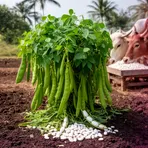
A bushy tropical plant with long pods and white seeds grown for animal feed and to improve soil

A bushy tropical plant grown for animal feed with long pods of white seeds
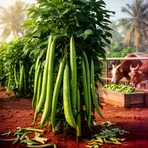
A bushy tropical plant with long pods grown for animal feed
Surface Forms
Morphology
This is a straightforward noun–noun compound where 'bean' clearly names the category (a legume/seed) and 'jack' functions as a modifier specifying a particular kind. A B1 learner who knows both words will reliably infer that 'jack bean' denotes a type of bean/plant even if they would not recover the full botanical description (annual, bushy, long pods) without further exposure.
Etymology
Jack bean may get its name from jack, a word for something ordinary and useful, plus bean. Farmers used this strong bean for many jobs, as animal feed and to make the soil better, so people called it a 'jack-of-all-trades' plant. That's why the name suggests a tough, 'all-purpose' crop.

