

Canavalia ensiformis
- noun
- Specialized
- Farmers in South America cultivate Canavalia ensiformis for its nutritious pods and ability to fix nitrogen.
Examples
-
The white seeds of Canavalia ensiformis can also be processed for use as animal feed.
-
Farmers often plant Canavalia ensiformis as a cover crop.
-
Canavalia ensiformis is often used as a green manure crop to improve soil fertility in tropical regions.
-
The Canavalia ensiformis is known for its nitrogen-fixing properties.
-
Canavalia ensiformis is commonly grown in tropical areas as a forage plant for livestock.
-
Farmers in South America utilize Canavalia ensiformis to enhance soil health through its nitrogen-fixing abilities.
-
The long pods of Canavalia ensiformis contain valuable seeds that are often fed to animals.
Synonyms

A bushy tropical plant grown for animal feed and to improve soil

A bushy tropical plant grown for animal feed with long pods of white seeds
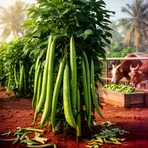
A bushy tropical plant with long pods grown for animal feed
Surface Forms
Morphology
Canavalia + ensiformis
This is a scientific Latin binomial (a genus + species epithet) functioning as a proper name rather than a compositional English phrase; its referential meaning (a particular plant) is not derivable from the parts. The second element 'ensiformis' is not a common English word (and its Latin sense would not be known to a B1 learner), so knowing the constituents would not allow a learner to infer the MWE's meaning.
Etymology
Canavalia ensiformis comes from a local plant name plus the Latin word ensiformis, which means 'sword-shaped'. The 'sword' image points to its long pods and helps you remember this bushy plant that is used to feed animals and to improve soil.

