
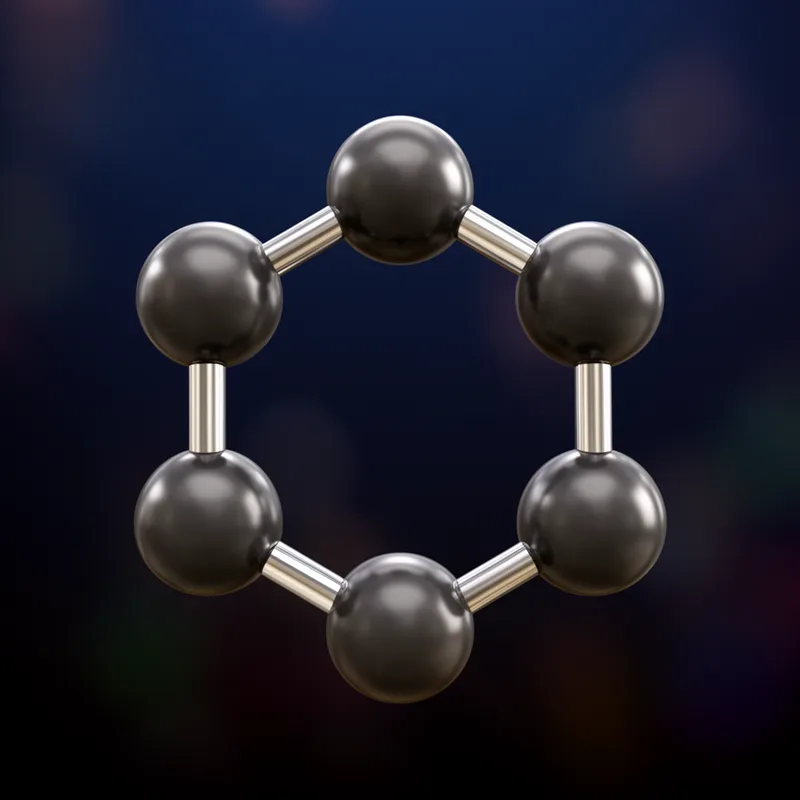
isocyclic
- adjective
- /ˌaɪsoʊˈsaɪklɪk/
- Specialized
- Many organic molecules, such as benzene, are described as isocyclic due to their carbon ring structures.
Examples
-
Many organic compounds including cyclohexane are classified as isocyclic because they have a ring structure made entirely of carbon atoms.
-
Chemists often compare isocyclic rings with heterocyclic rings during structural analysis.
-
Compounds with an isocyclic configuration typically display unique chemical properties.
-
The compound is isocyclic in nature.
-
Is the molecule isocyclic or acyclic?
-
The study focused on isocyclic compounds, which possess closed carbon rings critical for various chemical reactions.
-
Isocyclic compounds like cyclopentane are fundamental in organic chemistry due to their stable ring structures.
Synonyms


 1
6.8
Has atoms joined in a ring shape
 1
9.9
A chemical with a ring made only of carbon atoms
A molecule with a ring made only of the same atoms, usually carbon
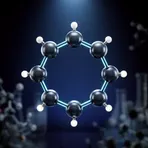
Having atoms joined together to form a ring

A molecule with atoms joined in a ring shape
Surface Forms
Morphology
Etymology
Isocyclic starts with iso- meaning 'equal' and ends with cycle meaning 'ring' or 'circle', so the word pictures a ring where all parts are the same. For example, benzene is isocyclic because its ring is made of only carbon atoms.