
isochron
- noun
- /ˈaɪsəˌkrɒn/
- Specialized
- In geology, an isochron helps in dating rock layers.
Examples
-
The isochron indicates the same age for all points.
-
Researchers used an isochron to compare the ages of volcanic layers across the continent.
-
The geologist drew an isochron to show areas where the rocks formed at the same time.
-
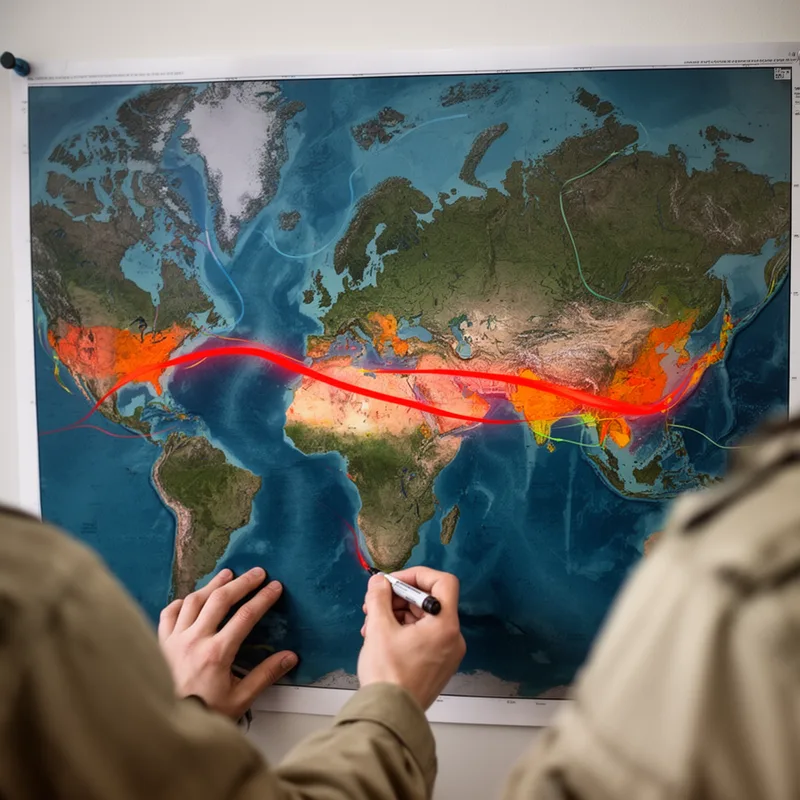
On the map, each isochron represents a different period in the region's geological history.
-
The isochron on the map illustrates the age of rock layers formed during the same time period.
-
Geologists use isochrons to represent the temporal evolution of different rock formations in their studies.
-
An isochron helps researchers identify the time at which various geological events occurred in a specific area.
Synonyms

A line on a map that connects places where an event happens at the same time

A line on a map that connects points with the same value, like temperature

A line on a map that connects places with the same value, like temperature

A line on a map that joins places with the same height or temperature
Surface Forms
Morphology
isochron = iso + chron
Formed from Greek combining forms iso- ('equal') + chron ('time'); the components hint at 'equal time' but they are not standalone English words and the term is technical, so learners may only partially infer the meaning.
Etymology
Isochron comes from the Greek parts iso- meaning 'equal' or 'same' and -chron meaning 'time', like in synchronize where things happen at the 'same time'. So an isochron is a line that joins points on a map or diagram that are the same in time or age.

