

isoagglutination
- noun
- /ˌaɪsoʊˌæɡlʊtɪˈneɪʃən/
- Specialized
- Blood typing relies on the principles of isoagglutination to determine compatibility.
Examples
-
Isoagglutination can occur during incompatible blood transfusions within the same species.
-
Researchers observed isoagglutination in the samples taken from the experimental group.
-
What is isoagglutination?
-
The study focused on isoagglutination in blood transfusions.
-
Isoagglutination can lead to serious complications if not identified during a blood transfusion.
-
In blood banking, isoagglutination testing is crucial for ensuring donor-recipient compatibility.
-
During their investigation, the scientists documented instances of isoagglutination among the study's subjects.
Synonyms


 1
9.3
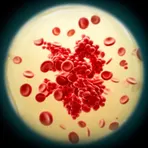
Small cells or particles sticking together to form clumps in a liquid like blood

Clumping of red blood cells after contact with a virus or antibody
Surface Forms
Morphology
isoagglutination = agglutination (semi-transparent) = iso + agglutin + ation
The prefix 'iso-' indicates 'equal' or 'same', but the specific biological context may not be immediately clear to all learners.
Etymology
The word isoagglutination comes from iso- meaning 'same' and agglutination meaning 'to stick together', like 'glue'. So isoagglutination describes cells of the same species being made to 'stick together', which is why it matters in blood matching and transfusions.