
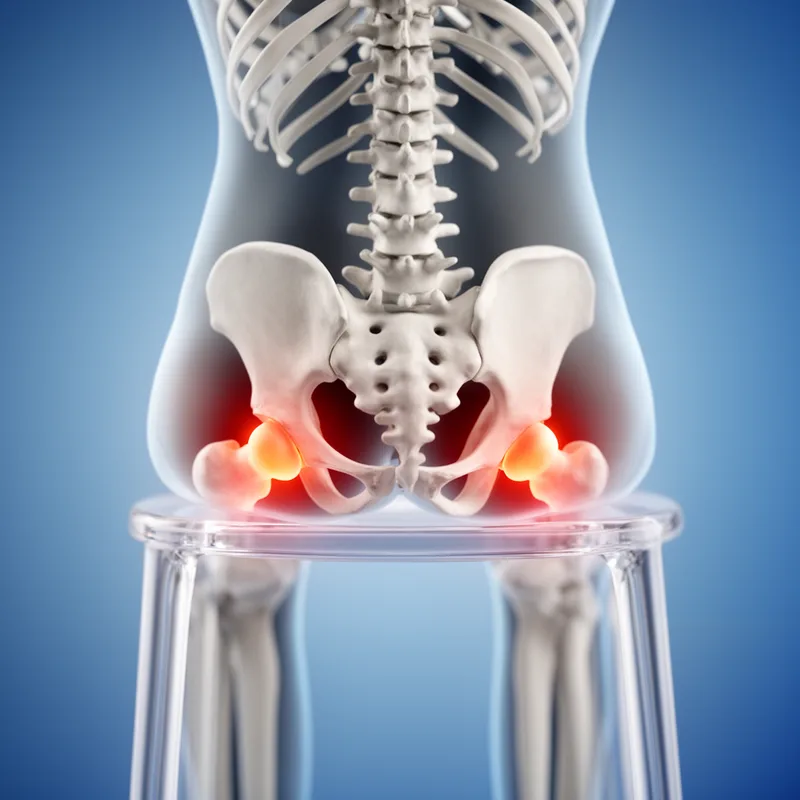
ischial


 1
9.8
1
9.8
- adjective
- /ˈɪskiəl/
- Specialized
- Secondly, wheelchair cushions with firm material under the thighs will facilitate a reduction in ischial tuberosity pressure when the leg height is lowered as much as possible.
- ischial tuberosity
- ischial pressure
- ischial loading
Examples
-
Pelvic Height (PH): vertical distance from the ischial tuberosity to the anterior superior iliac spine.
Academic text (1992) -
Intact Femur Length-B (IFLB): vertical distance from the ischial tuberosity to the lateral condyle of the intact femur.
Academic text (1992) -
Pressure on the ischial tuberosities as the legs were raised.
Academic text (1990) -
My bladder is full, pressing on my ischial bone.
Fiction book (2000) -
None had a history of pressure sores under the ischial tuberosities.
Academic text (1991) -
Changing footrest height may affect pressure on the ischial tuberosities and reduce the risk of ulcer formation.
Academic text (1990) -
For example, in spinal cord injury (SCI) patients, the sacral and ischial regions are subjected to large pressures during sitting.
Academic text (1995) -
Since the region of interest is the soft tissue between the cushion and the bottom of the ischial tuberosity, this region of fictitious high stress can be ignored.
Academic text (1994) -
Anterio-Posterior Dimension (AP): linear distance from the anterior aspect of the adductor longus tendon to the ischial tuberosity.
Academic text (1992) -
When sitting for long periods, it's important to relieve pressure on the ischial tuberosities to prevent discomfort.
Compounds
Surface Forms
Morphology
Etymology
The word ischial comes from the Greek word ischion, which means 'hip' and refers to the lower back part of the hip bone. So ischial means 'relating to the hip bone' — a helpful image is your 'sit bone' that feels the pressure when you sit.