
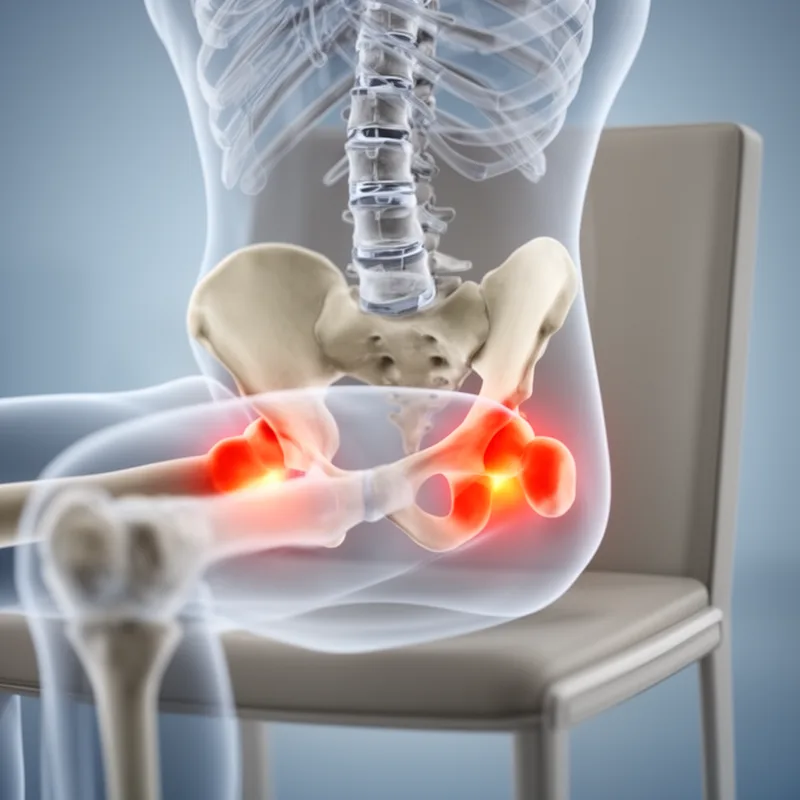
ischium


 1
9.9
1
9.9
- noun
- /ˈɪskiəm/
- Specialized
- The ischium is cited as the location where wheelchair users are most likely to develop pressure sores (7).
- ischium and pubis
- ischium and sacrum
- ischium, pubis, and ilium
Examples
-
The ischium (24 percent), sacrum (23 percent), trochanter (15 percent), heel (8 percent), and scapula (5 percent) are the most common sites for these ulcers (2).
Academic text (1999) -
For example, debilitated patients confined to a nursing home bed are prone to the development of ulcers over the sacrum and ischium areas.
Academic text (1999) -
The interface pressure distribution across the ischium was continuously measured by the Oxford Pressure Monitor.
Academic text (1993) -
GRAPH: Figure 6. Sweat analysis of normal subjects under the ischium. During load, the subject sat in a wheelchair.
Academic text (1993) -
The subject was seated directly on the canvas of a standard wheelchair with sweat pads attached to the ischium, as shown in Figure 2.
Academic text (1993) -
Both the wheelchair and bed support surfaces provided mean interface pressures at the ischium and sacrum, respectively, which were representative of the clinical setting.
Academic text (1993) -
The fusion of three ossification centers, the ilium, the ischium, and the pubis, makes up the innominate bone.
Academic text (2006) -
Each innominate consists of ilium, ischium, and pubis and bears an acetabulum for the femur, as it does in land mammals.
Academic text (2001) -
Measurement of TcpO2 for the PU group was performed by placing the membrane electrode 1 cm from the pressure ulcer located on either the trochanter, ischium, or sacrum.
Academic text (1999) -
During a fall, he landed directly on his ischium, causing considerable pain.
Synonyms
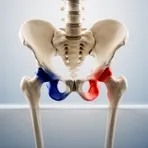
The lower back part of the hip bone that forms the pelvis

The lower back part of the hip bone that you sit on
Surface Forms
Etymology
Ischium comes from an old Greek word iskhion, which meant 'hip', so the ischium is the hip part of the pelvis; it is the lower, back bone you often sit on, sometimes called the 'sit bone'.