
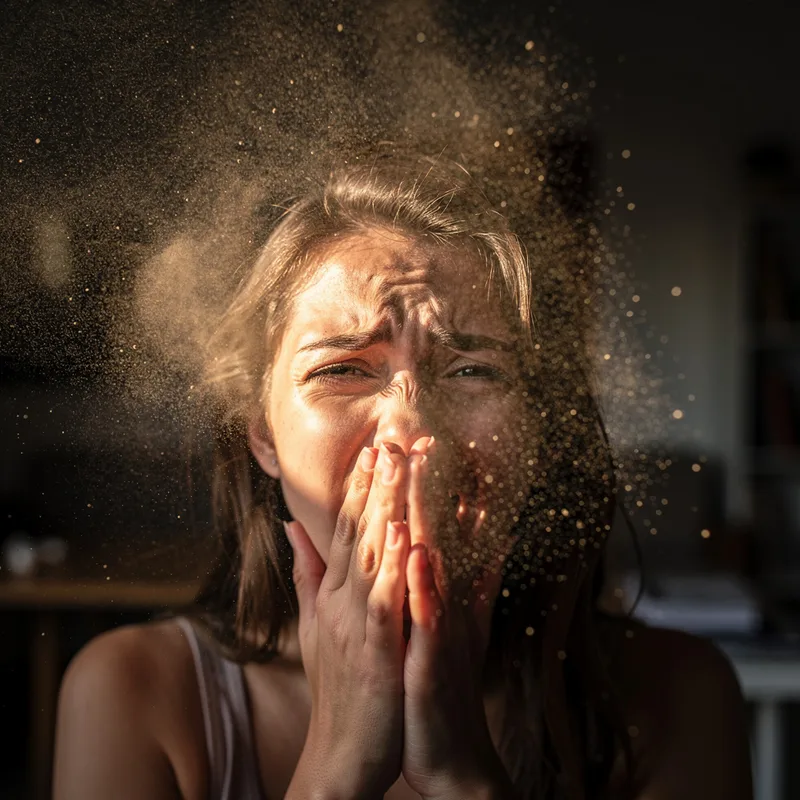
irritant
 15
6.0
15
6.0

- noun
- /ˈɪrɪtənt/
- Cold air and wind are irritants, making your eyes brim with reflex tears.
- irritant exposure
- respiratory irritants
- minor irritant
Loading YouTube…
Watch on YouTubeYou're just taking away any irritants on the skin.
- You're just taking away any irritants on the skin.
- It's rather that they have this, you know, physical irritant.
- So in those moments of sort of a potential irritant, a potential hassle doesn't have to become one.
- Yes, there can be parts of the container or the brand of certain things that can add fiber, but they can also be a gut irritant for a lot of people as well.
- I can see that that is a weakness and an irritant.
- I am skin irritant pepper spray.
- The problem with kinship is that while it's a very solid attachment, it's also an irritant.
Examples
-
Land reform was a serious irritant, but it was overruled by other U.S. interests and concerns.
Academic text (1994) -
Sodium thiosulfate is a respiratory irritant, can cause breathing problems.
-
I saw the blonde use an eye irritant.
-
The Internet filter in the public schools where I began my career was a constant irritant.
Academic text (2015) -
You're just taking away any irritants on the skin.
-
Despite her claim that sea-level ozone was only a minor irritant, Ray knew better.
Academic text (1996) -
My sinuses are very sensitive to irritants.
-
Russia's growing ties with China are proving to be another irritant for Russo-Indian relations.
Academic text (2003) -
An epidemic of unpaid wages had become one of the main irritants for voters in the pre-election months.
Academic text (1996) -
The principal cause is long-term exposure to airborne irritants, chiefly tobacco smoke.
Synonyms
 43
7.2
43
7.2
A person or thing that often causes trouble
 29
2.1
29
2.1
A thing that causes trouble or annoyance
 21
3.2
21
3.2
A person or thing that bothers you


 1
4.8
1
4.8
A substance that makes skin, eyes or breathing feel sore, like tear gas

Something that causes annoyance or trouble
Antonyms

Compounds
- Specialized
1
4.8
A substance that makes skin, eyes or breathing feel sore, like tear gas
How Irritating

Surface Forms
Morphology
Etymology
The word irritant comes from the Latin verb irritare, which meant 'to stir up' or 'to provoke', and it shares the same root as the common verb irritate. So an irritant is something that 'stirs up' discomfort, pain, or annoyance.