
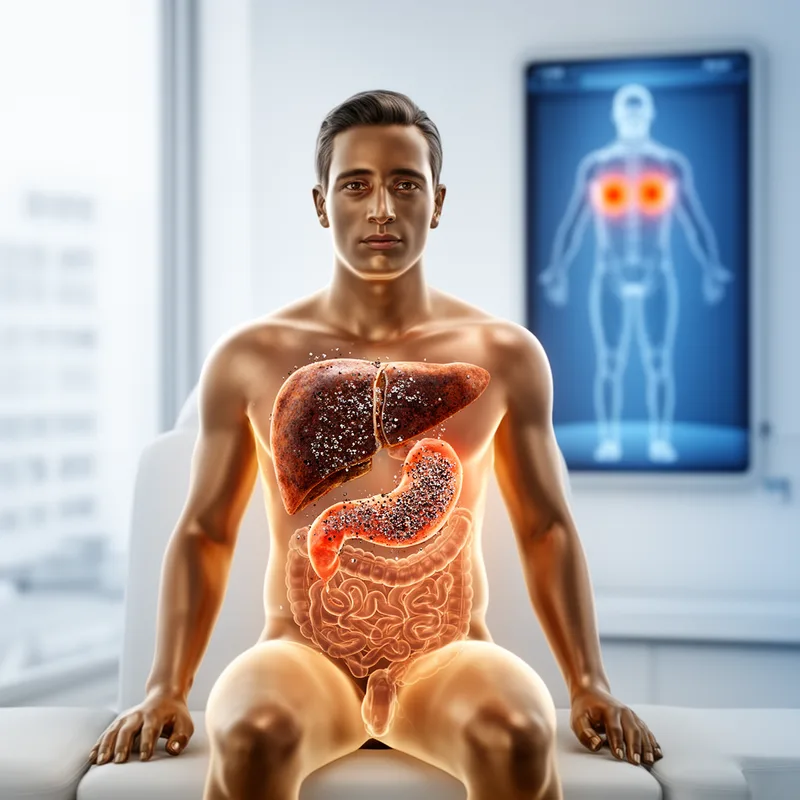
iron-storage disease
- noun
- /ˈaɪərn ˈstɔːrɪdʒ dɪˈziːz/
- Specialized
- The doctor diagnosed him with iron-storage disease after tests revealed abnormal iron levels in his liver.
Examples
-
Patients with iron-storage disease often develop signs such as bronzed skin and diabetes.
-
Early detection of iron-storage disease is important to prevent irreversible organ damage.
-
Patients with iron-storage disease often experience fatigue.
-
Have you heard about iron-storage diseases?
-
Early detection of iron-storage disease is important to prevent irreversible organ damage.
-
Patients with iron-storage disease often develop signs such as bronzed skin and diabetes.
-
The doctor diagnosed him with iron-storage disease after tests revealed abnormal iron levels in his liver.
Synonyms
 2
9.9
2
9.9

A condition in which too much iron builds up in the body and damages organs like the liver
A rare condition where too much iron builds up, causing bronze skin, high blood sugar, and liver damage
An inherited condition that makes the body store too much iron and can damage organs

A condition passed down in families where too much iron builds up in the body and harms organs

Too much iron in the body that can damage organs

An abnormal build up of iron in body tissues that happens after bleeding or blood transfusions
Antonyms

- Specialized
1
3.2
A health condition when the body lacks iron, making you tired and pale
Surface Forms
Morphology
iron-storage + disease
The compound is compositionally built from 'iron' + 'storage' + 'disease', so a learner who knows those words can infer it refers to a disease caused by stored/accumulated iron. Although the term is medical and somewhat technical, the semantic parts map straightforwardly onto the overall meaning and similar constructions exist in other languages, making it readily understandable.
Etymology
Iron-storage disease comes from the image of the body keeping metal in a storage place: iron kept in storage like boxes in a warehouse inside organs such as the liver. So, the name means 'too much iron' builds up in body tissues and can harm organs.