
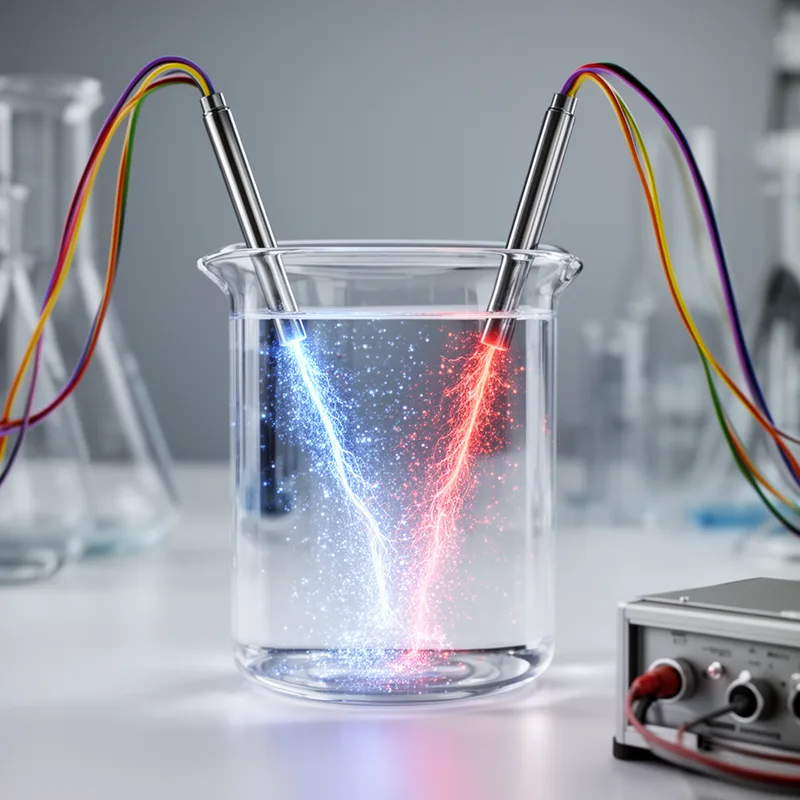
to ionate
- verb
- /ˈaɪəˌneɪt/
- Specialized
 :
ionar
:
ionar
- The lab technician carefully ionated the sample before measuring its properties.
Examples
-
Chemists ionate the solution to enhance its conductivity.
-
They are developing a new method to ionate different types of gases more efficiently.
-
Scientists ionate water to improve its conductivity in these experiments.
-
The researchers ionated the sample with a new method.
-
Scientists ionate water to improve its conductivity in these experiments.
-
Chemists ionate the solution to enhance its conductivity.
-
They are developing a new method to ionate different types of gases more efficiently.
Synonyms
 15
7.2
15
7.2

To change a small particle like an atom so it has an electric charge by losing or gaining electrons
Antonyms
Surface Forms
Morphology
Etymology
Ionate is built from ion ('a charged particle') and the verb ending -ate ('to make'), like in activate. So to ionate is to 'make into ions' or add electric charge to a substance, which fits the modern sense of treating a material to become ionic.