
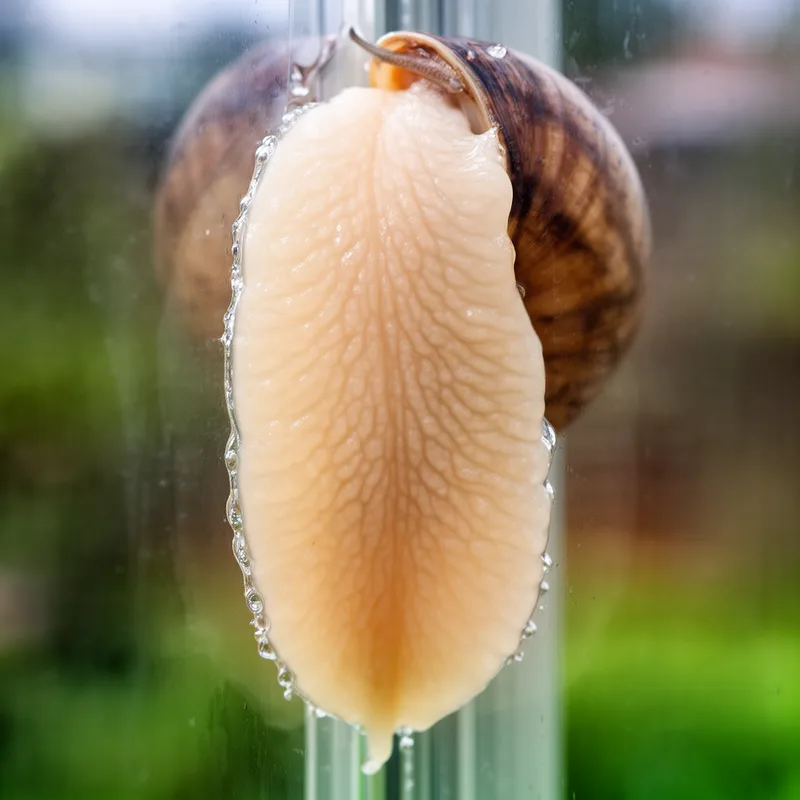
invertebrate foot
- noun
- /ɪnˈvɜrtəbrɪt fʊt/
- Specialized
- The invertebrate foot of a snail contracts rhythmically to propel it forward.
Examples
-
Scientists examined the structure of the invertebrate foot in various mollusks to understand its function.
-
The invertebrate foot of the octopus allows it to move gracefully.
-
In octopuses, the invertebrate foot has evolved into arms for grasping and movement.
-
Many invertebrate feet are adapted for different environments.
-
The invertebrate foot of a snail contracts rhythmically to propel it forward.
-
Scientists examined the structure of the invertebrate foot in various mollusks to understand its function.
-
In octopuses, the invertebrate foot has evolved into arms for grasping and movement.
Synonyms
 188
8.6
188
8.6

A soft part animals like snails use to move or stick to things
Surface Forms
Morphology
The phrase 'invertebrate foot' is a transparent noun–noun composition: knowing 'invertebrate' (an animal without a backbone) and 'foot' (a locomotor/attachment organ) lets a learner infer it refers to the foot of an invertebrate. This follows regular English compounding patterns and has clear cross-linguistic parallels, so a B1 learner who knows the constituents should understand the meaning.
Etymology
Invertebrate foot is a name for a real body part in animals: invertebrate means animals without a backbone and the foot is a strong, flat muscle they use to crawl or hold on. So, it means 'an organ for movement or attachment'.