

inverse
 8
6.2
8
6.2

- noun
- /ɪnˈvɜrs/
- In mathematics, the inverse of adding a number is subtracting that same number from the total.
- inverse of the variance
- inverse holds true
Loading YouTube…
Watch on YouTubeIn fact, I'm saying that the inverse of this statement is true.
- In fact, I'm saying that the inverse of this statement is true.
- Often is the inverse also true?
- Or is this just the exact inverse of whatever the mainstream believes?
- Which is the inverse of how most people look at career paths.
- But that is a inverse and we're done.
- And we saw the inverse with ivermectin.
- They're instead accepting the inverse of their trade partners trade and industrial policies.
Examples
-
Most currency conversion systems use straightforward multiplication and its inverse to generate a conversion from one currency to another and back.
Academic text (1999) -
The inverse of the absolute risk reduction yields an NNT estimate for the intervention.
Academic text (2015) -
So this is what turned out to be the inverse of that.
-
The point here is, in a certain sense, the inverse of what was discussed earlier.
Academic text (2014) -
OK, so this is the inverse of the GDP problem.
-
Note taking is, in a sense, the inverse of lecture delivery.
Academic text (1990) -
Electromagnetic force follows the inverse square law, just like gravity does.
-
That is the inverse problem, a bit more abstractly speaking.
-
Now, a new study suggests that the inverse is also true:
Academic text (2009) -
The wavelength is proportional to the inverse of the energy.
Synonyms
 430
1.0
430
1.0
A word with a completely different meaning from another word
 41
4.1
41
4.1
The other side of something that shows a different, often negative, effect
 18
7.9
18
7.9
A person or thing that is the exact opposite of another
 1
9.3
1
9.3
The direct opposite of something, for example order and chaos
Antonyms


Compounds
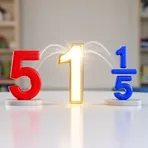


- Specialized
 1
6.5
1
6.5
A math function that gives the angle whose tangent equals a number




- Specialized
A function that reverses another function so you get the original number back


How Different

Surface Forms
Etymology
Inverse comes from the Latin parts in- and vertere, where vertere means 'to turn', so it originally meant 'turned the other way'. That's why an inverse is something that is the opposite or reverse of another thing, for example the inverse of a mathematical function.