

inverse
 17
6.1
17
6.1

- adjective
- /ɪnˈvɜrs/
- Specialized
- The work seemed to increase in inverse proportion to their waning energies.
- inverse relationship
- inverse proportion
- inverse correlation
Loading YouTube…
Watch on YouTubeLet's let's ask that very broad question, an inverse relation.
- Let's let's ask that very broad question, an inverse relation.
- And so that inverse relationship allows you to utilize the VIX.
- A portfolio of options of all strikes weighted in inverse proportion to the square of the strike level.
- So if your function takes X and gives you Y, your inverse function is taking that Y and giving you back X.
- And so it works in the inverse sort of way with red meat.
- But wait, why can't we use use substitution or something like an inverse trig integration rule?
- So what you can end up with is things that are called inverse scaling.
- And I think a lot of things work in this sort of inverse nature.
- He developed this technique in around the turn of the Millennium called inverse reinforcement learning.
Examples
-
There is an inverse correlation between how sexy a job is and it's ROI.
-
Inflation has an inverse effect on debt, so so use these things to your advantage.
-
Quite obviously, there is an inverse relationship between high property values and dead reptiles.
Academic text (1992) -
In addition, there was a clear inverse relation between the degree of response to APC and thrombosis risk.
Academic text (1993) -
As the temperature rises, the ice melts at an inverse rate, causing more water to pool on the ground.
-
The teacher explained that the inverse relationship between study time and exam stress means that less study often leads to more anxiety.
-
In this experiment, an inverse relationship was observed: as one variable increased, the other decreased significantly.
Synonyms
 32
3.9
32
3.9
Opposite to what is usual or expected

Relating to a change that makes something reversed in math or chemistry

Turned the other way or placed in the opposite order

Placed or turned so the top and bottom are swapped
Antonyms
Compounds


- Specialized
 1
6.5
1
6.5
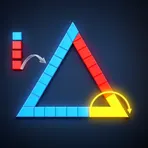
A math function that gives the angle whose tangent equals a number




- Specialized
A function that reverses another function so you get the original number back


Surface Forms
Morphology
Etymology
Inverse comes from the Latin parts in- and vertere, where vertere means 'to turn', so it literally means 'turned the other way', much like the word reverse. That's why we call a relationship inverse when one thing goes up and the other goes down.