
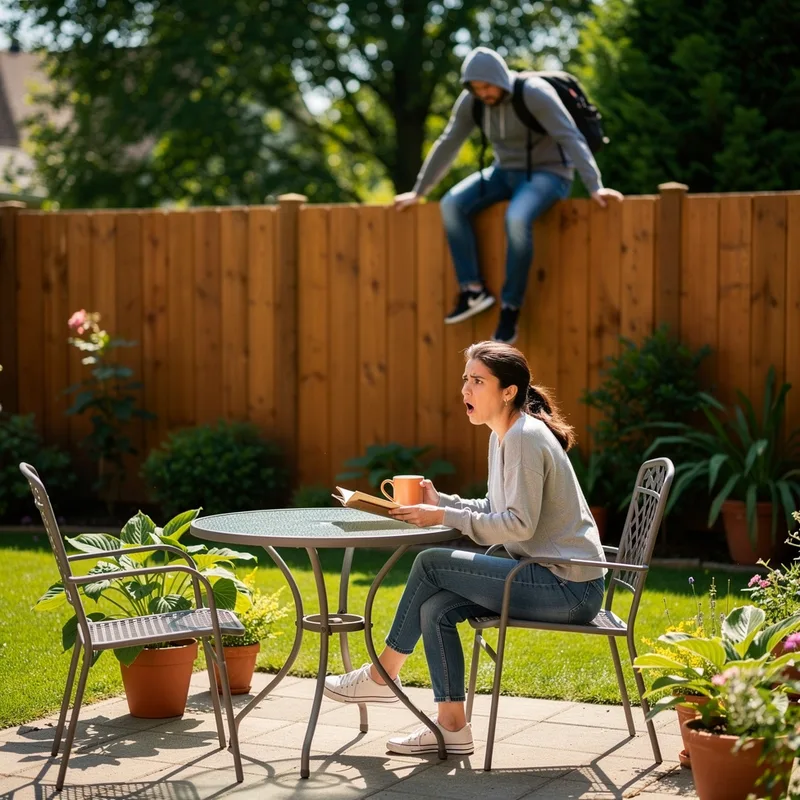
to intrude
 105
4.4
105
4.4

- verb
- /ɪnˈtruːd/
 :
entrometerse en
:
entrometerse en
- I hope I didn't intrude on your conversation when I came in.
- intrude on privacy
- intrude on family life
- intrude into everyday life
And finally, never forget that reality has a way of intruding.
- And finally, never forget that reality has a way of intruding.
- In other words, the folks in the next door valley, the next next group as it were intruding onto your, your feeding territory.
- A little bit later on, he'll say that these are foreign concepts which might otherwise intrude among the pure concepts of the understanding.
- You're married to a narcissist and you have a narcissistic parent who is intruding and weighing in on your parenting.
- Her talking about her right to intrude on the peaceful homes of gun owners.
- We can say anything that's real love and they will intrude on your time into your home.
Examples
-
And yet more and more conservatives want the government to intrude into private decisions like abortion and all and marriage and all of that.
-
Forgive me for having intruded in your meeting without your permission.
-
Another female I observed had no need to intrude into a neighbor's territory to achieve her goal.
Academic text (1995) -
Look, I don't mean to intrude, the door was open.
-
Don't intrude in my life anymore.
-
But the state should not dictate morality, should not intrude between a woman and her doctor.
Fiction book (1992) -
Many of the candidates also expressed reservations about intruding on family privacy.
Academic text (2012) -
I hope you'll forgive me for intruding.
-
I had an uneasy feeling of having intruded into a ladies' locker room.
Fiction book (1992) -
Obsessions are irrational, disturbing thoughts that intrude into your consciousness.
Synonyms
 127
7.4
127
7.4
To join a group in secret to get information or cause harm
 77
4.1
77
4.1
To enter someone's space or private life without permission
 75
3.8
75
3.8
To go into a place quietly so no one notices
 66
5.3
66
5.3
Try to learn about someone's private life in an impolite way
 59
5.5
59
5.5
Enter a room or conversation suddenly and rudely without being invited
 54
3.8
54
3.8
Interrupt a conversation to make a short comment or question
 30
3.4
30
3.4
To interrupt a conversation or activity without being invited
 27
7.3
27
7.3
To gradually move into someone else's area, space, or rights without permission
 22
4.6
22
4.6
To go into someone's space or life without permission
 21
3.3
21
3.3
To enter a room suddenly and interrupt people
 21
4.4
21
4.4
Interrupt someone who is speaking without being invited
 17
7.7
17
7.7
To try to find out private things about someone by looking or asking
 14
4.9
14
4.9
To begin to appear or affect someone slowly and quietly
 11
4.9
11
4.9
To go onto someone else's land without permission
 8
7.4
8
7.4
To gradually join a group without being noticed
 8
6.3
8
6.3
To start taking control of a business or area without being invited
 5
8.2
5
8.2
To join a conversation or activity without being invited
 5
5.6
5
5.6
To join a line or enter a place without waiting your turn
 3
5.2
3
5.2
Go into a room or conversation suddenly and interrupt people
 2
6.8
2
6.8
To gradually move into someone's personal space, rights or privacy
 1
7.3
1
7.3
To try to take part in other people's business without being asked
 1
7.9
1
7.9
To get involved in other people's business without being asked


 1
9.1
1
9.1
Push yourself into a place or conversation when people do not want you
 1
5.2
1
5.2
To go into a place for a short time to look around

To force yourself into someone's space or attention without being invited

Interrupt someone who is speaking by joining their conversation without waiting

Suddenly appear or enter with force

To enter or take part in something where you are not allowed, often selling without a license
Phrasal Verbs
How Intrusive
73
3.9

- Informal
59
5.5
105
4.4
∞
1.0
- Informal
25
3.4
Surface Forms
Morphology
intrude = in + trude
Although the prefix 'in-' means 'into', the root 'trude' is a Latin combining form not a standalone English word, so learners cannot reliably derive the meaning from its parts.
Etymology
The word intrude comes from Latin parts in- 'into' and trudere 'to push'. So, to intrude is to 'push into' someone else's place or conversation without permission, which is why it feels rude or unwelcome.