
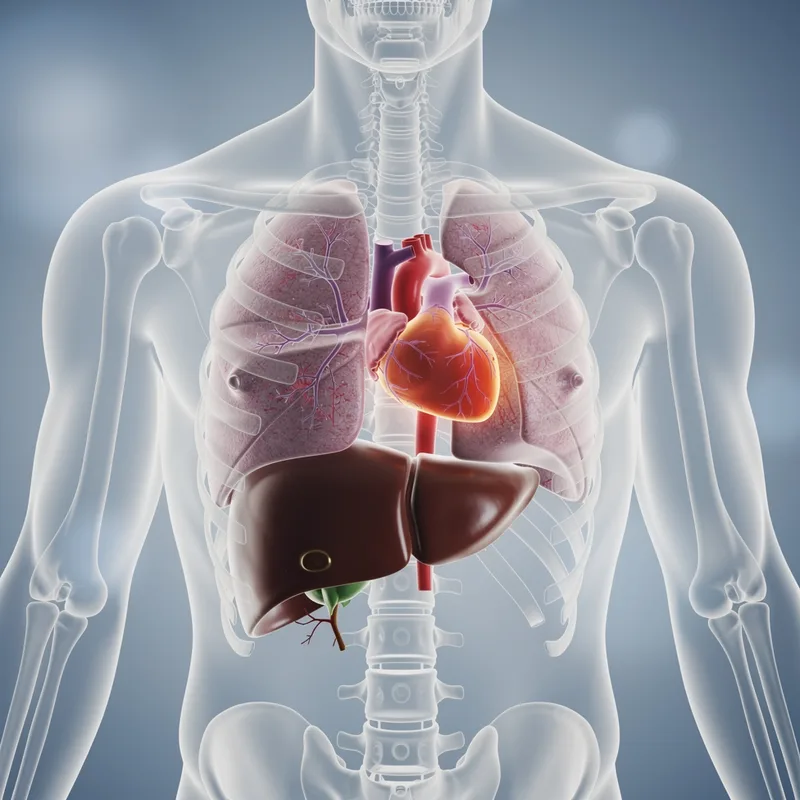
internal organ
 23
3.0
23
3.0

- noun
- /ɪnˈtɜrnəl ˈɔrɡən/
- His body got so hot it damaged his internal organs, his heart especially.
- other internal organs
Loading YouTube…
Watch on YouTubeThen just so we're clear, the largest internal organ, and this is by weight.
- Then just so we're clear, the largest internal organ, and this is by weight.
Examples
-
As the immune system is destroyed, internal organs would shut down.
Fiction book (1992) -
On Okinawa, most of the internal organs are chopped, salted, and stored in a jar.
Academic text (2018) -
I just expected to find some internal organs.
-
Look at the internal organs.
-
You talked about internal organs.
-
Afterward, the internal organs are washed to clean them inside and out.
Academic text (2018) -
The extent to which internal organs, such as the heart and kidneys, need treatment is obviously an urgent matter.
Academic text (1990) -
The CNS is also connected to internal organs such as the heart, the kidneys, and the liver.
Blog text (29) -
With Vinnie helping, she worked silently and quickly, removing the breastbone and exposing the internal organs.
Fiction book (1992) -
A healthy human liver is the largest internal organ, weighing about 3 pounds.
Synonyms
 473
2.6
473
2.6
A part of an animal's body made of different tissues that does a specific job
A main internal body part inside the chest and belly, like the heart or liver

A body part that does a particular job, for example the heart or liver
Surface Forms
Morphology
The meaning is directly and compositionally derived from 'internal' (located within) + 'organ' (a body part performing a function); a learner who knows both words will infer it refers to an organ inside the body. This is a standard adjective+noun combination common across languages and medical contexts, so it is immediately comprehensible to B1 learners.
Etymology
Internal organ combines internal and organ: imagine your body as a house and an internal organ is like a hidden pump or heater working behind the walls. So, it means 'an important organ kept inside the body', such as the 'heart' or 'liver'.