

internal ear
- noun
- /ɪnˈtɜrnəl ɪr/
- Specialized
- The doctor explained that damage to the internal ear can lead to hearing loss and dizziness.
Examples
-
The only way that tinnitus, even if caused by a ruined inner ear or internal ear nerves, could potentially be compared to a missing limb is if the inner ear was truly... well... um... missing!
Blog text (34) -
Many mammals, including humans, rely on their internal ear for balance while walking.
-
The internal ear contains structures essential for both hearing and equilibrium.
Synonyms
 14
4.1
14
4.1

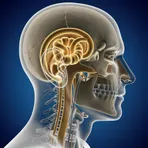
The part inside the ear that helps you hear and keep balance


 1
8.4
1
8.4
Small connected spaces in the inner ear that help a person hear and keep balance
Surface Forms
Morphology
The meaning is directly and compositionally derived from 'internal' (located within) + 'ear' (the hearing/balance organ), so a learner who knows both words can infer it refers to the inner part of the ear. This type of locative noun phrase is cross-linguistically common (e.g., 'inner ear' equivalents in many languages) and follows straightforward English compounding, making it accessible to a B1 learner.
Etymology
Internal ear names the inner part of the ear hidden inside the skull; the word internal means 'inside' and ear is the part for sound. Think of it as a tiny protected room with a spiral 'snail' and small tubes that send sound to the brain and help keep you steady, so it means the part that controls 'hearing' and 'balance'.