
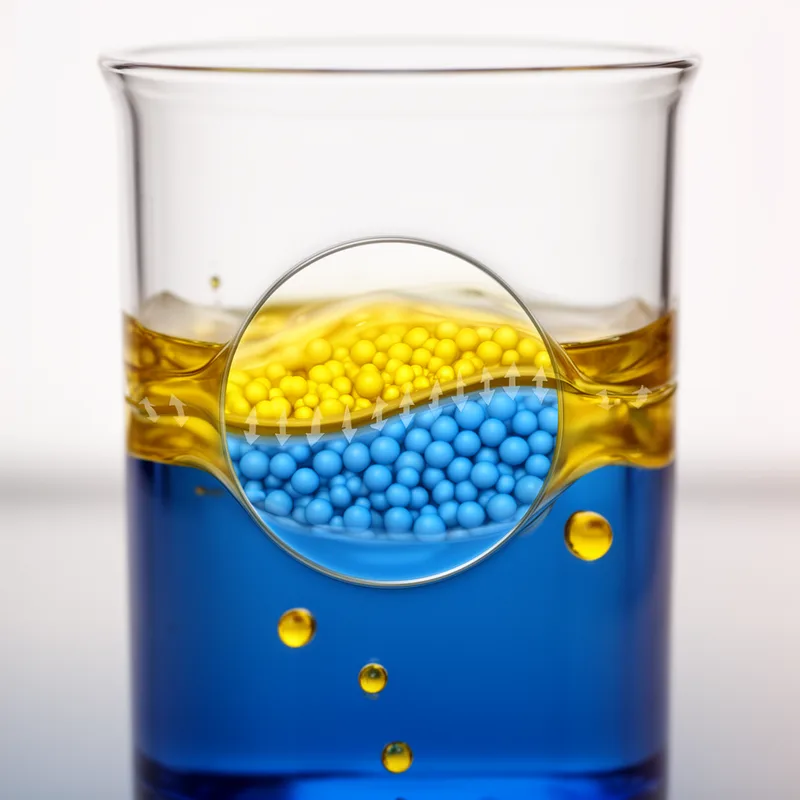
interfacial tension
- noun
- /ˌɪntərˈfeɪʃəl ˈtɛnʃən/
- Specialized
- The effectiveness of an emulsifier depends on its ability to reduce interfacial tension between oil and water.
Examples
-
Measuring interfacial tension is important in the formulation of paints and coatings.
-
Researchers observed that temperature changes altered the interfacial tension at the boundary of the liquids.
-
The interfacial tension between oil and water is crucial for many chemical processes.
-
High interfacial tension can prevent mixing of two liquids.
-
Researchers observed that temperature changes altered the interfacial tension at the boundary of the liquids.
-
The effectiveness of an emulsifier depends on its ability to reduce interfacial tension between oil and water.
-
Measuring interfacial tension is important in the formulation of paints and coatings.
Synonyms

 5
4.3
5
4.3

A force that makes a liquid surface pull together like a skin

A pull at the surface between two liquids that do not mix, like oil and water
Surface Forms
Morphology
The phrase is directly compositional: 'interfacial' locates the noun 'tension' at an interface, so a learner who knows both words can infer it means tension at a boundary between substances. Although technical, the modifier+noun pattern is regular and cross-linguistically common, making the meaning predictable from the constituents.
Etymology
Interfacial tension comes from a simple picture: when two liquids that 'do not mix', like oil and water, meet, the place between them acts like a tight skin. The word interfacial points to this 'boundary' and tension is the pulling force of that skin, so the term means the force at the boundary between two liquids that do not mix.