

interfacial surface tension
- noun
- /ˌɪntərˈfeɪʃəl ˈsɜrfɪs ˈtɛnʃən/
- Specialized
- Researchers measured the interfacial surface tension between oil and water under various conditions.
Examples
-
The interfacial surface tension between oil and water is crucial for emulsification.
-
The stability of an emulsion is influenced by its interfacial surface tension.
-
Adding a surfactant can reduce the interfacial surface tension and promote mixing of the liquids.
-
Can you measure the interfacial surface tension in this experiment?
-
Adding a surfactant can reduce the interfacial surface tension and promote mixing of the liquids.
-
Researchers measured the interfacial surface tension between oil and water under various conditions.
-
The stability of an emulsion is influenced by its interfacial surface tension.
Synonyms

 5
4.3
5
4.3

A force that makes a liquid surface pull together like a skin
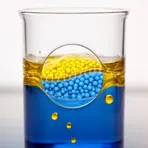
The force at the surface between two liquids that do not mix, like oil and water
Surface Forms
Morphology
interfacial + surface + tension
The term is fully compositional: 'surface tension' denotes tension at a surface and the adjective 'interfacial' specifies that this surface is an interface between substances, so the meaning 'surface tension at an interface (e.g. between oil and water)' is directly derivable from the parts. This follows a standard modifier+noun pattern common across languages, so a learner who knows the constituent words will understand the MWE.
Etymology
Interfacial surface tension is like a tight 'skin' at the 'boundary' where two liquids meet, for example oil and water. The words interface, meaning the meeting line, and surface tension, meaning the 'pull' that makes the skin tight, explain why the term refers to the 'pull' at that boundary that keeps the liquids from mixing.