

incorporeal
 2
9.9
2
9.9

- adjective
- /ɪnˈkɔːrpəriəl/
- In this schema, the Spirit is regarded as an eternally invisible and incorporeal force superior to the earthly realm, which is mired in contingency and change.
- incorporeal substance
- incorporeal force
Loading YouTube…
Watch on YouTubeYou also have to study the incorporeal and to you know, because it's incorporeal, invisible world as well.
- You also have to study the incorporeal and to you know, because it's incorporeal, invisible world as well.
Examples
-
The people on the stage are like paper silhouettes, somehow incorporeal and full of delicate spirituality.
Fiction book (1993) -
A world whose creatures are incorporeal is a world devoid of sex and death.
-
If this was really a disease, it was a mighty incorporeal one, with virtually no physical aspects at all.
Fiction book (1995) -
A world whose creatures are incorporeal is a world devoid of sex and death.
Academic text (2000) -
Rather, ornament had a more subtle, mobile, even incorporeal meaning.
Academic text (1998) -
As the intellect's activity, thinking is likewise incorporeal or immaterial.
Academic text (2017) -
The Orthodox believe the angels to be incorporeal beings, created by God before the actual creation.
-
The people on the stage are like paper silhouettes, somehow incorporeal and full of delicate spirituality.
Synonyms
 22
7.2
22
7.2
Something that cannot be touched and is often a feeling or quality
 15
8.0
15
8.0
Seeming to exist without a body, like a voice or spirit
 4
7.4
4
7.4
Not physical and cannot be touched
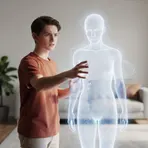 1
7.0
1
7.0
Not having a body you can touch or see
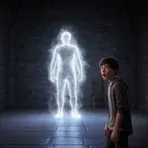

 1
8.1
1
8.1
Not having a physical form, like a spirit or ghost
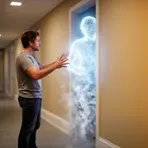 1
9.8
1
9.8
Without a physical body or shape
 1
7.7
1
7.7
Has no physical form and is about ideas or feelings

Not having a physical form like a ghost or spirit

Not having a physical body, like a ghost

About the mind or spirit rather than the body
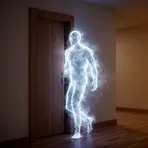
A being that has no physical body like a ghost
Antonyms


How Physical

Surface Forms
Morphology
Etymology
The word incorporeal comes from Latin parts in- meaning 'not' and corpus meaning 'body', and you can see the same root in corpse meaning 'a dead body'. So something incorporeal is 'not a body' and has no physical form, like a ghost or an idea.