
to imbricate


 1
9.8
1
9.8
- verb
- /ˈɪmbrɪkeɪt/
- Specialized
- As they decorated the cake, the layers were imbricated to create a beautiful design.
Examples
-
But for someone like Bob, money and success are thoroughly imbricated in everything else.
Fiction book (1998) -
Nothing progresses in a straight line; it's more—well, imbricated.
Fiction book (1997) -
Corts faces an imbricated predicament that pits rhetoric against epistemology.
Academic text (2004) -
For instance, the recent American fascination with the hoarder is imbricated with a mass revaluation of attitudes toward excess in the wake of recent economic collapse.
Academic text (2016) -
Many feminist film theorists have viewed mainstream filmmaking as composed of production and exhibition practices imbricated in an identifiable set of social and political power relations.
Academic text (2000) -
The fact that the British Empire can be registered in such a way in a Spanish-American novel points to how the nineteenth-century Spanish-American nation-state, never fully autonomous after independence, was imbricated within global economic relations.
Academic text (2016) -
Recovering and reclaiming cultural traditions and their corresponding visual expressions, entangled and blurred by centuries of colonial interventions, is thus imbricated with identity politics and notions of nation.
Academic text (2015) -
Whether that system operates under the flag of Allied or Axis powers, all—except Margherita in the Zone—are imbricated in the institutional cooptation of embodied pleasure.
Academic text (2017) -
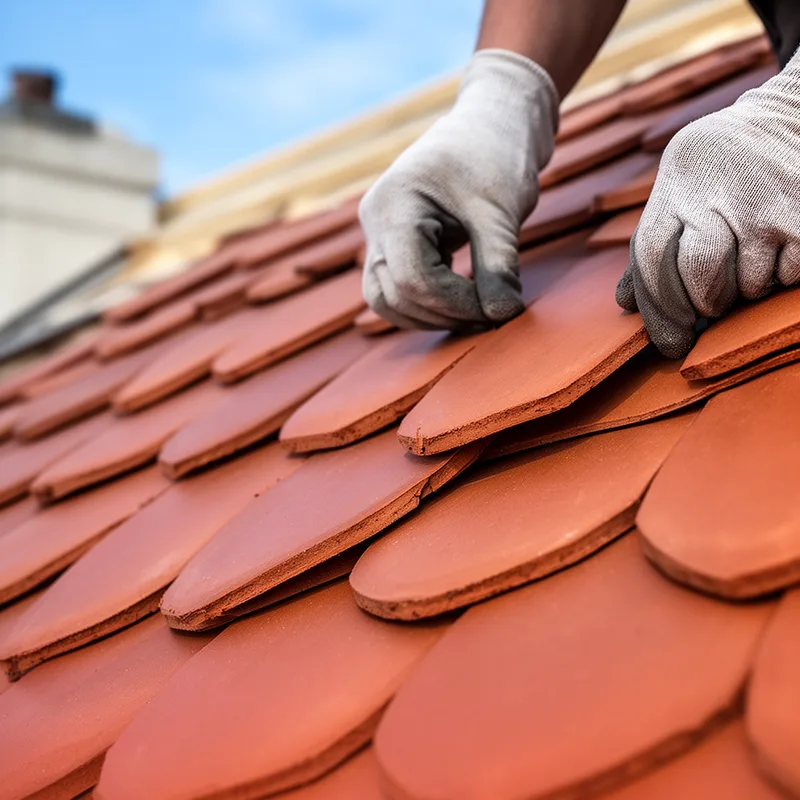
The roof tiles were carefully imbricated to ensure they fit together without gaps.
-
The scales of the reptile lay imbricated, providing protection from the elements.
How Overlapping

Surface Forms
Morphology
imbricate = imbric + ate
Although the suffix '-ate' is recognizable, the root 'imbric' is not a standalone English word and the word is a learned borrowing, so learners cannot reliably derive the meaning from familiar English morphemes.
Etymology
Imbricate originally meant to cover with imbrex 'roof tiles', so to imbricate is to place parts so each one overlaps the next. That is why the verb imbricate means to arrange things like roof tiles, scales, or shingles.