
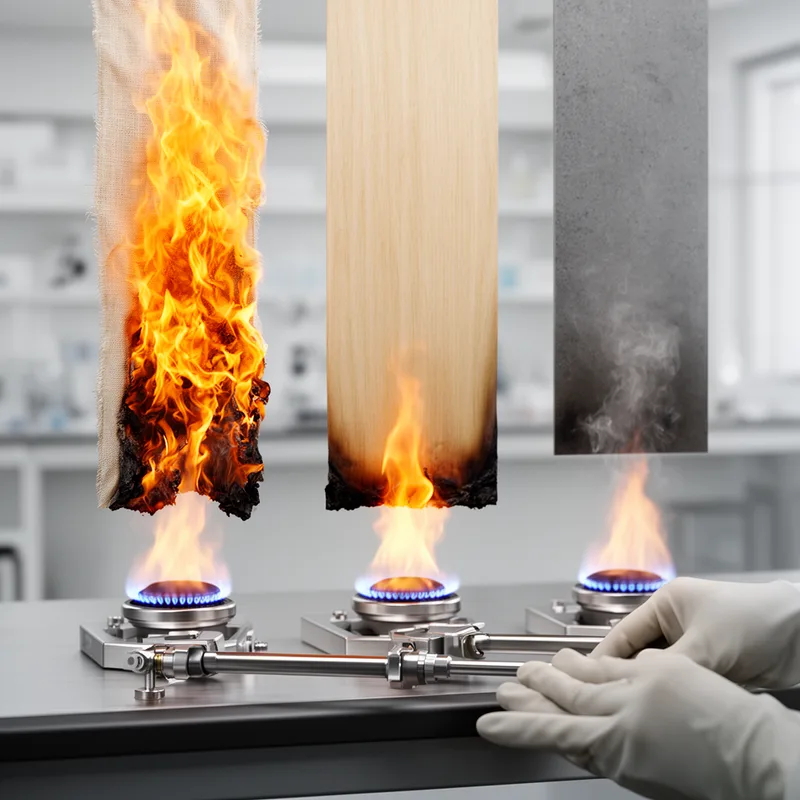
ignitability
- noun
- /ɪɡˈnɪtəˌbɪlɪti/
- Specialized
- The engineer explained that the ignitability of the chemical depends on its temperature and pressure.
Examples
-
Although incinerator ash was not listed as a hazardous waste, it nevertheless qualified as hazardous if it satisfied any of the four "hazardous characteristics" specified by federal law: namely, ignitability, corrosivity, reactivity, or toxicity.
Academic text (1993) -
The characteristics upon which RCRA regulates certain wastes as hazardous are ignitability, corrosivity, reactivity, and toxicity. Id. at sections 261.21-261.24.
Academic text (1992) -
Theoretical estimates confirmed the ignitability of the D-T mixture in the initiator, but, as in the theoretical document of 1945, did not confirm that nuclear combustion could ignite and propagate in the main body of thermonuclear fuel.
Academic text (1996) -
Some materials have low ignitability, making them safer to handle near open flames.
-
In construction, choosing products with low ignitability can help prevent fire hazards.
Synonyms

 1
6.1
1
6.1

How easily something catches fire and burns quickly
 1
7.1
1
7.1
How easily a thing catches fire and keeps burning

Easily catches fire and burns quickly
A quality that allows something to catch fire and burn

How easily something can catch fire
How Flammable

Surface Forms
Morphology
Etymology
Ignitability comes from the Latin ignis meaning 'fire' and from the familiar English verb ignite, which means 'to catch fire'. The -ability part means 'ability', so ignitability is how easily something can catch fire.