
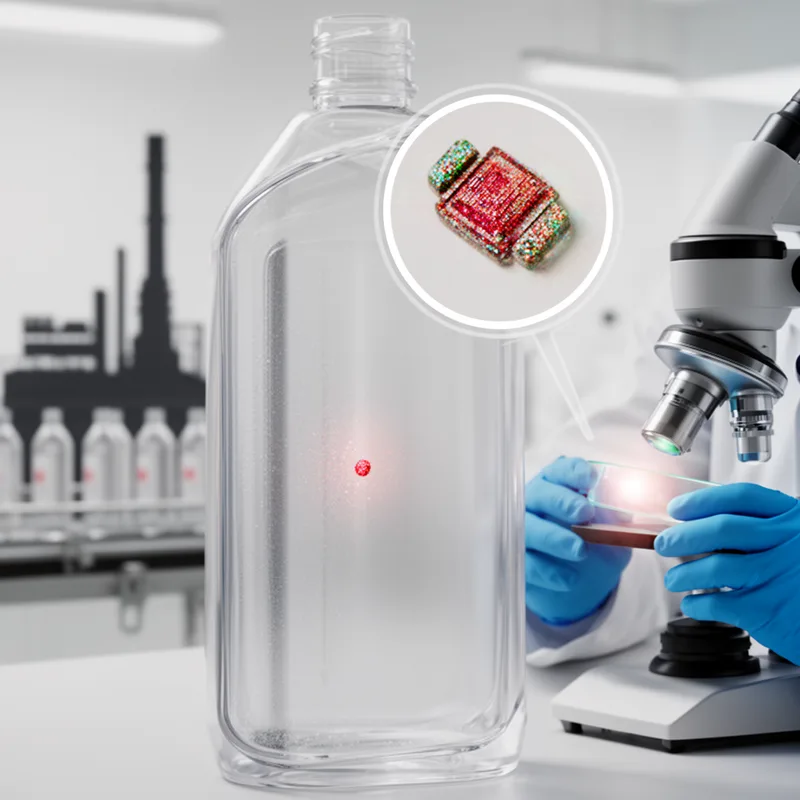
identification particle
- noun
- Specialized
- Manufacturers use identification particles to track the origins of their products.
Examples
-
A single identification particle can be enough to prove authenticity in forensic investigations.
-
Advanced packaging often contains identification particles invisible to the naked eye.
-
The identification particle was added to the product for tracking.
-
We need to analyze the identification particles in this batch.
-
A single identification particle can be enough to prove authenticity in forensic investigations.
-
Manufacturers use identification particles to track the origins of their products.
-
Advanced packaging often contains identification particles invisible to the naked eye.
Synonyms

 180
1.0
180
1.0

A small piece of paper or plastic attached to something to show information
 2
3.8
2
3.8
A code, number or name that stands for one record in a system

A tiny particle placed in objects to help identify and trace them
Surface Forms
Morphology
The meaning is directly compositional: 'identification' (the act or means of identifying) modifies 'particle' (a tiny bit), so a B1 learner who knows both words can infer it is a tiny particle used for identification or tracing. This noun+noun compound follows common English and cross‑linguistic patterns, making the MWE transparent to learners.
Etymology
Identification particle comes from the idea of a tiny secret particle added to a product to give it identification. Think of it as a 'hidden fingerprint' that can show where the product was made, so the term means a small bit added to prove where something came from.