
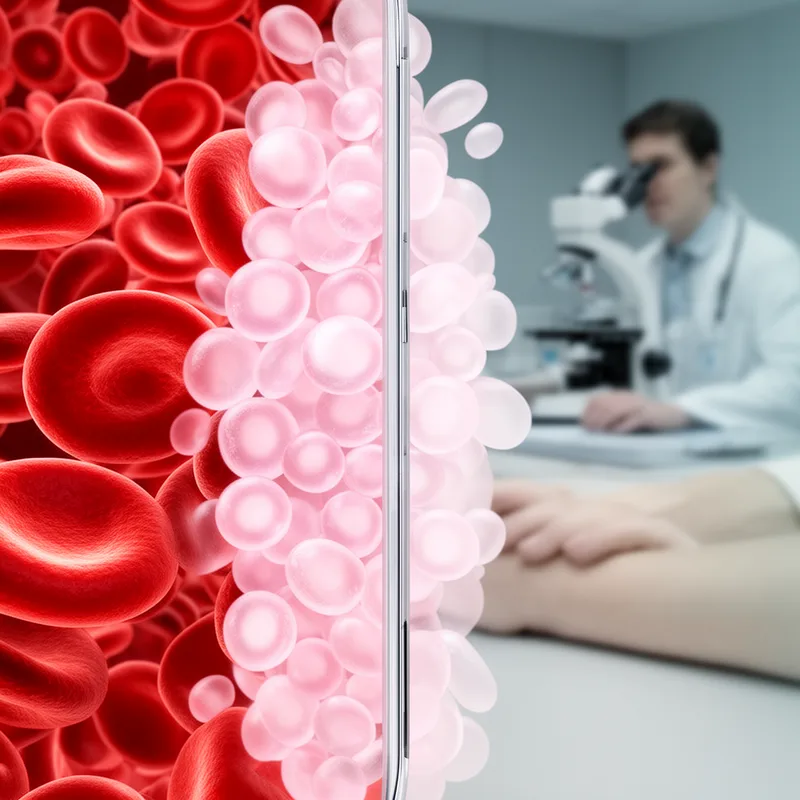
hypochromic anemia
- noun
- /ˌhaɪpoʊˈkroʊmɪk əˈniːmiə/
- Specialized
- In patients with hypochromic anemia, the red blood cells look paler than usual due to low hemoglobin levels.
Examples
-
If the RBCs produced have too little hemoglobin, they are abnormally small—thus, the name microcytic hypochromic anemia.
Academic text (2003) -
Doctors often diagnose hypochromic anemia through blood tests that reveal a deficiency of hemoglobin in the red blood cells.
-
Patients suffering from hypochromic anemia may experience fatigue and weakness as a result of inadequate oxygen transport.
Synonyms

 37
3.6
37
3.6

A blood problem in which there are too few red blood cells, causing tiredness and weakness
 5
3.5
5
3.5
A health problem that affects the blood, like anemia or leukemia
How Pale
- Specialized

- Specialized
Surface Forms
Morphology
The compound is compositional: 'hypochromic' literally means reduced color/paleness and 'anemia' denotes a deficiency of red blood cells, so together they describe anemia in which the red cells are paler than normal (i.e., contain less hemoglobin). This follows regular medical compounding patterns and would be understandable to a learner who already knows both constituent terms.
Etymology
Hypochromic anemia comes from the literal idea of 'less color' in the blood. Hypochromic means 'less color' in red blood cells and anemia means 'not enough red blood', so the name describes red cells that look paler because they have less of the red substance that carries oxygen.